Jamabandi Haryana 2026: Complete Guide to Checking Haryana Land Records, Killa Number & Mutation Online
How to check jamabandi, killa number, shajra map, and mutation status on jamabandi.nic.in for Haryana. Step-by-step guide to land record verification before any Gurgaon, Faridabad, Panchkula, or Haryana property purchase.
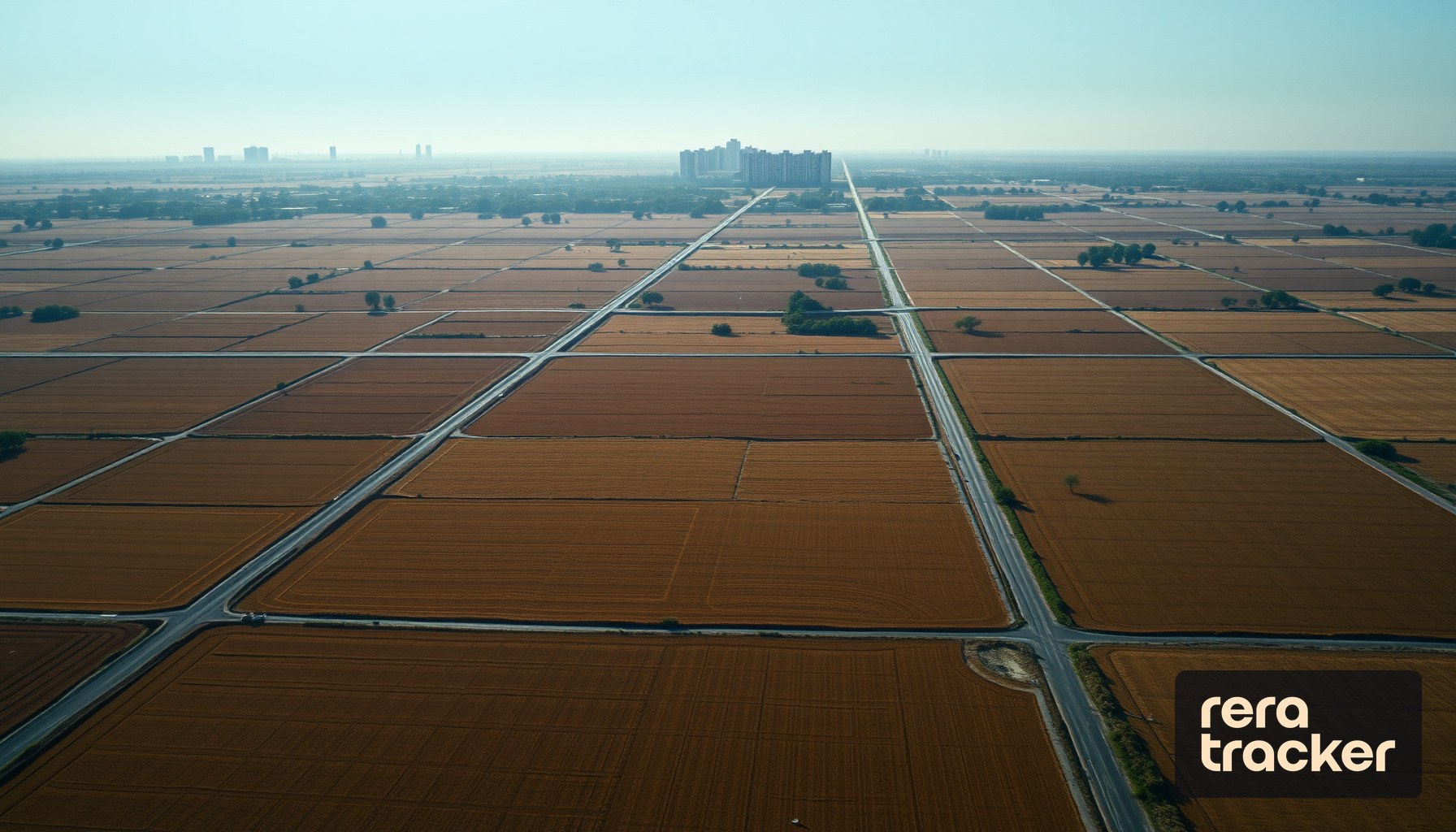
Haryana has India’s highest per-capita residential property values outside Mumbai. Gurgaon / Gurugram alone is home to some of the most expensive apartments, plots, and commercial space in the country. Which makes jamabandi verification — the online check of Haryana land records — the most consequential five minutes of any Haryana property transaction.
This guide covers the complete flow: the portal, the document types, step-by-step lookup, killa number decoding, and cross-verification with HRERA for project buyers.
What Is Jamabandi Haryana?
Jamabandi is the revenue ledger of land records in Punjab and Haryana. It lists, for every plot, the owner(s), the area, the nature of rights, and the transaction history. In Haryana, the digital version is accessible at jamabandi.nic.in — the combined Punjab + Haryana land-records portal run by NIC.
The portal gives you access to three interlinked record types:
| Record | What it is | When you need it |
|---|---|---|
| Jamabandi | Land ownership ledger — who owns which killa, how much area, rights type | Every property transaction |
| Intkaal / Mutation | The ongoing status of any change-of-ownership process | Post-sale verification; buyer protection |
| Shajra / Cadastral Map | The survey map with plot boundaries and neighbour plots | Physical plot verification and boundary check |
Haryana also integrates Record of Rights (ROR) access for certain district-level records and the Registered Deed Search for Sub-Registrar records.
Step-by-Step: Checking Jamabandi on jamabandi.nic.in
1. Visit jamabandi.nic.in
The portal opens with a combined Punjab + Haryana dashboard. Click on “Jamabandi” from the menu.
2. Select State → District → Tehsil → Village
For Haryana:
- State: Haryana
- District: Gurugram, Faridabad, Panchkula, Karnal, Rohtak, Hisar, Kurukshetra, Sonepat, etc.
- Tehsil: The sub-division within the district
- Village: Revenue village (Mauza)
3. Choose your year of jamabandi
Haryana jamabandis are revised every 4–5 years. The portal shows the latest and several historical jamabandis. Select:
- Latest Jamabandi — current ownership status
- Older Jamabandis — useful for tracing ownership history through earlier cycles
4. Search by one of four methods
- Owner Name (Khatedar Naam) — type the name; the portal returns all entries
- Khewat Number — the account identifier grouping one or more killas under the same ownership
- Khasra / Killa Number — if you know the specific plot
- Date of Mutation — if you know when a recent transaction happened
5. View and download
The jamabandi displays on screen. Click “Print / Download” for the PDF. For a certified copy with QR verification (required for loan applications, legal use, HRERA filings), use the “Request Certified Copy” option and pay the fee (~Rs 25–50).
Decoding a Haryana Land ID: Killa, Murabba, Rect
Haryana’s revenue survey — historically influenced by Punjab’s canal colony system — uses a grid-based numbering that’s slightly different from UP’s simpler khasra system.
A typical Haryana land identifier looks like:
“Killa No. 17, Murabba No. 23, Rectangle (Rect) No. 84, Village Badshapur, Tehsil Gurgaon”
What each number means:
| Term | Meaning |
|---|---|
| Rectangle (Rect) | The largest grid unit — a rectangular area of land in the village survey |
| Murabba | A sub-division within the rectangle — typically 25 killas |
| Killa | The specific plot — Haryana’s equivalent of khasra; 1 killa ≈ 1 acre in standard measurement |
One rectangle = multiple murabbas. One murabba = 25 killas. One killa ≈ 1 acre (4,840 sq yards or 4,047 sq m).
Why this matters for buyers:
When a seller says “I own Killa 17 in Murabba 23”, that is a specific 1-acre plot. When they say “I own 8 marla plot”, that is an urban sub-division measured differently — 1 marla = 272 sq ft traditional or 225 sq ft modern Haryana urban.
For urban Haryana cities (Gurgaon, Faridabad, Panchkula), the sector system overlays the original killa-murabba-rectangle numbering. Your plot in Sector 58 Gurgaon still has an underlying killa number from the pre-urban survey. The jamabandi portal shows both.
What’s Actually on a Haryana Jamabandi?
A typical Haryana jamabandi entry includes:
| Column | Meaning |
|---|---|
| Khewat No | The account (grouping owner + ownership class) |
| Khatoni No | Sub-account (sub-grouping if needed) |
| Killa No / Khasra No | Specific plot identifier |
| Area | Land area in Kanal-Marla (traditional) and hectare / sqm (modern) |
| Nature of land | Chahi (well-irrigated), Nehri (canal-irrigated), Barani (rainfed), Banjar, Abadi |
| Khatedar / Malkiat Naam | Owner name and father’s name |
| Share | Each owner’s fractional share if joint |
| Nature of rights | Malik Kabza (full owner), Maurusi (heritable), Bata’idar (tenant), etc. |
| Kashtkar / Cultivator | Who is actually cultivating (if agricultural and leased) |
| Mutation Entries | Every transaction change, dated |
| Rahan / Mortgage | Any recorded mortgage |
| Pending Mutation (Intkaal) | Ownership changes in process but not yet finalised |
The Mutation (Intkaal) Check
The mutation section is the one buyers ignore at their peril. A “pending mutation” means the seller has filed for a change of ownership (typically as the current owner post-purchase from a previous seller) but the process is still open at the tehsil. Until mutation is complete:
- The older owner’s name may still be the primary record
- Transferring to you may create a chain of pending mutations, each with its own legal risk
- Loan applications may be rejected because the current owner can’t be confirmed
Rule: check mutation status before paying. If pending, ask the seller to either (a) complete it before you purchase, or (b) include a clear mutation-completion clause in the sale agreement with a holdback on payment.
Shajra Map: Haryana’s Cadastral Visual
The jamabandi is the text ledger. The shajra is the visual map. Access it through the same jamabandi.nic.in portal, under “Shajra” or “Cadastral Map” option.
On the shajra map:
- Each killa is marked with its number and boundary
- The rectangle and murabba structure is visible as a grid
- Adjacent plots, roads, water courses, and government lands are shown
- Abadi (residential) land is distinguished from agricultural killas by colour
A printable shajra extract for your specific killa(s) costs the same nominal fee as a jamabandi extract. Carry it to the site visit — compare with what the seller is showing.
Haryana District-Specific Considerations
Gurugram (Gurgaon)
- Gurgaon has undergone aggressive urbanisation — many killas have been converted from agricultural to urban through the HUDA / HSVP allotment and licence process
- For plots or projects on HUDA / HSVP sector land, the Jamabandi shows the authority as the landholder
- For projects on licence-converted private land, the private landholder is the owner — verify the Change of Land Use (CLU) certificate issued by the Directorate of Town & Country Planning (DTCP) Haryana separately
- Buying in Gurgaon without cross-checking HRERA + DTCP licence + jamabandi is the single most common source of title disputes
Faridabad
- Similar authority structure (Faridabad Development Authority / HSVP)
- Sector system overlays older village killas
- Resale of older sector plots — verify the original allotment chain
Panchkula
- Chandigarh-adjacent, tightly regulated
- HUDA/HSVP sectors dominant
- Lower-margin market but clean title conventions
Karnal, Sonipat, Rohtak
- Mixed urban-agricultural
- Investment plot schemes active
- Traditional killa-murabba system prominent; carry careful unit conversions
Cross-Verifying Haryana Projects with HRERA
Every Haryana RERA-registered project must file its underlying land details — killa numbers, khewat numbers, DTCP licence or HUDA allotment — as part of the HRERA registration.
The verification flow for any Haryana project buyer:
- Pull the HRERA registration at haryanarera.gov.in (Gurugram jurisdiction) or Panchkula jurisdiction portal
- OR check ReraTracker’s Haryana projects index — the same data indexed with full 14-section project page
- Find the “Land Details” section on the HRERA filing — it lists every killa, khewat, and authority licence
- Pull each killa on jamabandi.nic.in — verify the current owner matches the developer or the authority
- Check DTCP licence (if private developer) — the licence number should match the one on the HRERA filing
For the step-by-step RERA verification walkthrough, see how to check RERA registration in India.
ReraTracker indexes every HRERA-registered Gurgaon and Haryana project with the full filing — browse the HRERA approved Gurugram projects 2026 master list.
Haryana Land Unit Quick Reference
Haryana jamabandis often list area in traditional Punjab units alongside metric:
| Unit | Relation |
|---|---|
| 1 Killa | ≈ 1 Acre = 4,840 sq yd = 4,047 sq m |
| 1 Kanal | 8 Kanal = 1 Acre; so 1 Kanal = 605 sq yd = 506 sq m = 5,445 sq ft |
| 1 Marla | 20 Marla = 1 Kanal; so 1 Marla = 272 sq ft (traditional) or 225 sq ft (urban modern) |
| 1 Bigha (HR) | Pucca 2,529 sq m = 27,225 sq ft |
For the complete Indian unit conversion table, see our Indian Land Unit Converter Guide 2026.
What Jamabandi Does NOT Cover
Like any revenue record system, the jamabandi is authoritative for land rights but does NOT substitute for:
- Sub-Registrar deed chain — sale deeds, gift deeds, succession orders
- DTCP / HUDA / HSVP licence — for converted / allotted land
- Master plan / zoning — maintained by DTCP or municipal corporations
- Building plan sanctions — approved by DTCP or the local municipal body
- HRERA registration — for projects under RERA scope
- Litigation — active civil suits may not appear on the portal
A complete Haryana property verification combines: Jamabandi + Shajra + Sub-Registrar + DTCP (if applicable) + HRERA (for projects) + Encumbrance Certificate.
The Three-Minute Pre-Purchase Check
Before any Haryana property deal — even an initial “expression of interest” payment:
- Pull the jamabandi on jamabandi.nic.in — confirm owner + area + no pending mutation
- Pull the shajra — confirm plot location matches physical reality
- For projects: verify HRERA registration + DTCP licence
- For authority allotments: verify on the authority portal (HUDA, HSVP, Haryana Shehri Vikas Pradhikaran)
For state-specific land-records guidance, see our Bhulekh UP 2026 Guide and Bhu Naksha Rajasthan 2026 Guide. For a complete pre-purchase checklist, see Flat Buying Checklist India 2026.
Intelligence beyond boundaries
12,000+ projects tracked. 5,000+ builders verified. RERA-verified data, fair market insights, and premium intelligence.
Explore ProjectsMore on Guides
Mahabhulekh Maharashtra & 7/12 Utara Complete Guide 2026: How to Check Online, Download, and Verify Before Property Purchase
Complete walkthrough of mahabhulekh.maharashtra.gov.in — how to check 7/12 utara, 8A, Fer Far, property card online. Mumbai, Pune, Nashik, Nagpur land record verification step-by-step, and how to cross-check with MahaRERA data.
MP Bhulekh (mpbhulekh.gov.in) Complete Guide 2026: How to Check Madhya Pradesh Land Records, Khasra, Khatauni Online
Step-by-step walkthrough of mpbhulekh.gov.in — MP khasra lookup, khatauni download, Bhu Abhilekh portal, district search across Indore, Bhopal, Gwalior, Jabalpur. Free Naksha download and MP RERA cross-verification.

Stamp Duty & Property Registration Charges in Gurgaon 2026: Complete Breakdown with Circle Rate, Women Rebate & Joint-Ownership
Complete 2026 guide to Gurgaon stamp duty and registration charges — standard rate, women-discount, joint ownership, commercial vs residential, circle rate vs market rate, gift deeds, and how to calculate total transaction cost before booking any property.
Stay updated on RERA
Get the latest insights on real estate regulations and compliance delivered to your inbox.
No spam. Unsubscribe anytime.