RERA Approved Projects in Greater Noida 2026: Verified List & Buyer's Guide
Complete guide to RERA-registered projects in Greater Noida 2026. Verified UPRERA data, micro-market analysis, builder track records, and what to check before buying.
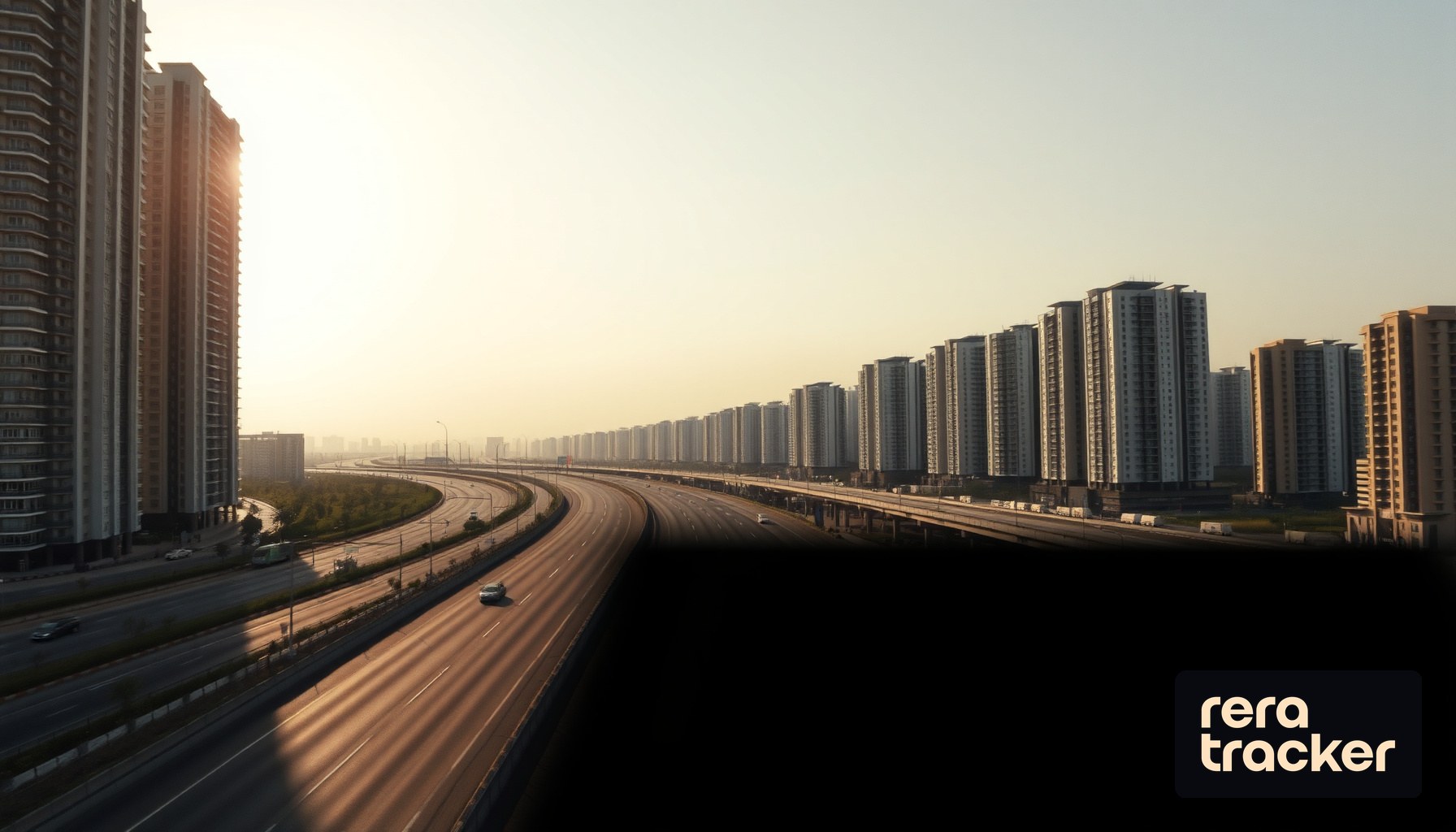
Greater Noida is one of the most active — and one of the most risk-laden — residential markets in the National Capital Region. Over the past decade, this corridor has produced both genuine wealth for disciplined buyers and some of the most painful cautionary tales in Indian real estate. New launches continue to flood the market every quarter, often with aggressive marketing that outpaces what the builder has actually committed to in writing. Without RERA verification, it is almost impossible to separate a credible project from a well-packaged gamble.
This guide is built for buyers and investors who want the full picture on RERA-approved projects in Greater Noida for 2026. It covers how UPRERA registration works, the dominant micro-markets and their price bands, the major builders operating in the region, the red flags shaped by Greater Noida’s specific history, and a step-by-step approach to verifying any project before you commit. The goal is not to tell you which project to buy — it is to give you the tools to make that decision yourself, backed by verifiable regulatory data.
Why RERA Verification Matters More in Greater Noida
Greater Noida is a special case. Unlike established central Noida sectors, large parts of Greater Noida — particularly Greater Noida West — were developed on an aggressive growth thesis that attracted dozens of builders, many of whom lacked the balance sheet to finish what they started. The Amrapali and Unitech collapses, along with prolonged distress across several other portfolios, left tens of thousands of homebuyers stranded with incomplete or never-started apartments. These were not small regional builders either; several were national names with glossy brochures and celebrity endorsements.
That history is the reason RERA registration is not optional due diligence for Greater Noida buyers. It is the entire basis for any purchase decision. A builder who markets an unregistered Greater Noida project in 2026 is either ignoring the law or has a structural reason for avoiding registration — neither of which is acceptable. The Real Estate (Regulation and Development) Act, 2016 was designed precisely for markets like this, where information asymmetry has historically favoured developers at the cost of end users.
When a project is properly registered with UPRERA, the builder takes on specific, enforceable obligations:
- A legally committed completion date. This is the date against which delay compensation and refund claims will be measured.
- A dedicated escrow account. At least 70% of buyer funds must sit in a project-specific account and be drawn down only against verified construction milestones.
- Carpet area based sales. No more inflated super built-up area pricing tricks at the booking stage.
- Quarterly progress filings. The builder must publicly disclose construction status and financial progress.
- Consent-based plan changes. Sanctioned plans cannot be modified without the written consent of two-thirds of existing allottees.
None of this matters for an unregistered project. Walk away from any Greater Noida development that cannot produce an active, verifiable UPRERA registration number.
How UPRERA Works for Greater Noida Projects
The Uttar Pradesh Real Estate Regulatory Authority (UPRERA) is the single regulator for all residential projects in the state, including every project in Gautam Buddha Nagar district — which covers Noida, Greater Noida, Greater Noida West, and the sectors along the Yamuna Expressway. The authority maintains its public portal at up-rera.in, which is the single source of truth for RERA-registered projects in the region.
To verify any Greater Noida project yourself on the official portal:
- Visit up-rera.in and navigate to the “Registered Projects” section.
- Filter by district (select Gautam Buddha Nagar) or search directly by project name, builder name, or registration number.
- Open the project page and review the registration number, registration date, declared completion date, unit count, and promoter details.
- Check the current status — active, expired, or revoked — and look for any extensions that may have been granted.
- Review the quarterly progress reports to see whether the builder is actually filing them on time.
The UPRERA portal was built for regulatory disclosure, not for buyer decision-making. The raw data is there, but stitching it together across multiple projects, builders, and years is time-consuming. This is exactly the gap that ReraTracker was built to fill — aggregating UPRERA records into a format that lets buyers compare, monitor, and investigate projects quickly without spending hours on the official portal.
Greater Noida Micro-Market Breakdown
Greater Noida is not one market. It is a collection of very different sub-markets, each with its own infrastructure story, buyer profile, and price band. Understanding these micro-markets is the first step in narrowing down your search.
Greater Noida West (Noida Extension)
Greater Noida West — still widely known as Noida Extension — has the highest density of residential projects in the entire corridor. The area took a severe hit during the Amrapali-era collapses, but it has since been the single largest beneficiary of RERA’s intervention. Several stalled projects have been revived under RERA oversight, and new registrations have introduced a fresh generation of builders with tighter compliance discipline.
Typical pricing in Greater Noida West ranges from Rs 4,500 to Rs 8,000 per sq ft, depending on the sector, project positioning, and proximity to the FNG Expressway or upcoming metro connectivity. Areas closer to established sectors in Noida tend to command the higher end of this range. New launches near the proposed metro extension are starting to push towards the upper end of the band as expected connectivity improves.
Greater Noida West remains the most scrutiny-heavy micro-market in the region. Builder track record is decisive here — a well-priced project from a builder with historical delays is a significantly worse investment than a slightly costlier project from a builder with a clean compliance record.
Pari Chowk and Central Greater Noida
Pari Chowk sits at the administrative and commercial heart of Greater Noida and has historically been the reference point for pricing in the region. Projects in and around Pari Chowk, including the Alpha, Beta, Gamma, and Sigma sectors, typically price between Rs 5,500 and Rs 9,000 per sq ft for mid-segment inventory, with select premium projects in mature sectors pushing higher.
These sectors benefit from established social infrastructure — schools, hospitals, retail, and direct road connectivity to the Noida-Greater Noida Expressway. Buyers here are generally end-users or long-term investors rather than flippers, which tends to keep price behaviour more stable than in the outer, newer sectors.
Knowledge Park and Education Corridor
The Knowledge Park corridor (Knowledge Park 1 through 5) was developed around Greater Noida’s cluster of universities, engineering colleges, and professional institutions. Residential projects here typically target working professionals, faculty, and families who value proximity to the education ecosystem.
Pricing in Knowledge Park and adjacent sectors generally sits in the Rs 5,000 to Rs 7,500 per sq ft range. Demand is steadier than speculative, which makes RERA compliance particularly important — end users in this pocket are less forgiving of delays than pure investors.
Techzone and Commercial Corridors
Techzone sectors, built around the IT and commercial push, host a mix of residential and mixed-use developments. Projects here typically price between Rs 5,500 and Rs 8,500 per sq ft, with premium towers in well-located pockets reaching higher. The buyer base is heavily working-professional, and project quality varies widely across builders — making builder-level verification essential.
Surajpur and the Outer Sectors
Surajpur and the outer Greater Noida sectors offer the most affordable inventory, typically in the Rs 4,000 to Rs 6,500 per sq ft band. These sectors sit furthest from established infrastructure and metro connectivity, which means appreciation is heavily tied to long-term infrastructure delivery — the Noida International Airport at Jewar, the FNG Expressway, and the expanding metro network.
Affordable pricing in these sectors does not equal lower risk. In fact, the outer sectors have historically carried the highest share of stalled and delayed projects, because they attracted builders with weaker balance sheets. RERA data for these projects deserves the most scrutiny, not the least.
Major Builders Active in the Greater Noida Market
Greater Noida has attracted a mix of national and regional developers, and each has a different footprint and track record. The following builders have significant RERA-registered portfolios in the corridor. This is a general reference of who is active, not a compliance endorsement of any specific project — compliance status can change, and specific projects within a builder’s portfolio can perform very differently.
- Gaur Group (Gaursons). One of the most active builders in Greater Noida and Greater Noida West, with a broad portfolio across mid-segment and premium inventory.
- Ace Group. Has a substantial registered portfolio across Greater Noida and Noida Expressway sectors, active in both mid-range and premium developments.
- Mahagun Group. Known for larger integrated townships and mid-to-premium residential developments in the Noida and Greater Noida corridor.
- Supertech. Has a long history in the Greater Noida West area with numerous registered projects, though some have faced well-documented compliance issues over the years.
- Prateek Group. Regional developer with multiple RERA-registered projects in Greater Noida and Greater Noida West.
- ATS Group. Established NCR developer with a Greater Noida presence focused on the premium and integrated township segment.
- Amrapali legacy projects. Several projects originally launched by the Amrapali group are now under court-monitored completion through NBCC and other agencies. These carry a completely different risk and verification profile from fresh RERA-registered projects.
The takeaway here is important: a builder name is not a verdict. A historically strong builder can have a weak project, and a builder with past difficulties may have new projects under tighter compliance. You need to evaluate the specific project on its specific RERA record — not on the builder’s brand alone.
ReraTracker builds builder-level views that aggregate every RERA-registered project by a single developer, letting you see delivery rates, active complaints, and compliance patterns across their entire Greater Noida portfolio in one place.
What to Check in Any Greater Noida Project Before Buying
Before putting down any money, run through the following checklist on the project’s RERA record. These are the items that matter most in the Greater Noida context specifically.
1. Registration Status and Expiry
Is the registration currently active? Has it expired without renewal? Has it been revoked or suspended? An expired registration is a legal problem, not a paperwork issue — any sales activity under an expired registration is non-compliant with the Act.
2. Construction Stage vs Declared Timeline
Compare the declared completion date against the current stage of construction. A project that is 18 months away from its RERA commitment but is still in foundation or early structure work is a serious warning sign. Cross-check against the latest quarterly progress filing.
3. Builder Track Record in Greater Noida
How many projects has the builder registered in the Gautam Buddha Nagar district? Of those, how many have been delivered on time? Are there projects stuck in repeated extensions? A builder with one late project may be dealing with genuine external issues. A builder with a pattern of delays across multiple projects is almost certainly facing structural problems.
4. Complaint Volume and Nature
Check the complaints section of UPRERA for the project and the builder. A high volume of possession-related complaints relative to unit count is a decisive red flag. So are complaints about deviations from the sanctioned plan, quality defects, or refund disputes.
5. Escrow Compliance Signals
Direct escrow data is not always fully public, but signals are visible. Penalties for escrow violations, refusal of extensions due to fund misuse, or adverse observations in quarterly filings all point to money being spent outside the regulatory framework. Greater Noida’s distressed-project history was built almost entirely on escrow-style violations — the exact behaviour RERA was designed to prevent.
6. Extensions and Revised Timelines
A project that has been granted two or more extensions is almost always in trouble. Read the reasons cited for the extensions, look at when they were granted, and compare against construction progress.
7. Quarterly Progress Filings
Is the builder filing quarterly progress reports on time? Are the filings consistent with what you see on site if you visit? Skipped or delayed filings indicate a builder who is either avoiding disclosure or has stopped prioritising compliance.
8. Sanctioned Plan vs Marketing Brochure
Compare the RERA-filed sanctioned plan against the project brochure. Unit sizes, tower layouts, amenities, and common areas should match. Any material difference is a violation that you can raise with UPRERA, but you want to avoid those projects in the first place.
Historical Lessons: Amrapali, Unitech, and What They Taught Buyers
No discussion of Greater Noida RERA compliance is complete without understanding what happened in the pre-RERA era. The Amrapali collapse is the single most important case study — tens of thousands of homebuyers, many of them middle-class families on leveraged EMIs, found themselves holding allotment letters for apartments that were either incomplete or never under construction. Funds collected from buyers had been diverted across group companies to finance unrelated projects. The Supreme Court eventually intervened, and NBCC was brought in to complete select projects under court supervision.
The Unitech case ran on a similar pattern: aggressive pre-sales, opaque fund management, and a cascade of incomplete obligations across multiple projects. Buyers had no regulated route to force disclosure, demand refunds, or even verify whether their money was being used on the project they had bought into.
What these cases taught the Indian real estate market — and what the RERA Act was specifically designed to address — is straightforward:
- Pre-sales without construction progress are a fund-diversion risk.
- Buyer money cannot be mingled with general builder finances.
- Public, enforceable completion commitments are the only way to align builder incentives with buyer interests.
- A builder’s brand, advertising spend, or celebrity endorsements are not evidence of delivery capability.
- Regulatory disclosure, not builder assurance, is the only verifiable source of truth.
Every clause in a RERA registration — the escrow requirement, the quarterly progress filings, the completion date, the carpet area disclosure — exists because it addresses a specific failure mode that Greater Noida and similar markets have lived through. When you verify a project on UPRERA, you are not doing a formality. You are running exactly the checks that would have protected Amrapali-era buyers if they had existed at the time.
Red Flags Specific to the Greater Noida Market
Beyond the generic RERA red flags, a few patterns are specific to Greater Noida and deserve extra attention.
Over-Leveraged Builders
Some Greater Noida builders have historically maintained aggressive launch pipelines that outpaced their actual execution capacity. Multiple simultaneous launches without corresponding on-ground progress across those projects is a classic warning sign. Check how many projects a builder currently has under active registration and whether each one has credible progress.
Stalled Legacy Projects
Greater Noida still carries stalled inventory from the pre-RERA era. Some of these have been revived under court or regulatory supervision, while others remain in limbo. These projects operate under different rules — often with court-appointed committees or NBCC oversight — and should not be evaluated on the same basis as fresh RERA-registered projects.
Promoter Entity Changes
Be very cautious with projects where the promoter entity has changed after registration. This can signal financial distress, restructuring, or an attempt to shield the original promoter from liability. The new entity may not have the same delivery commitment or even the same balance sheet as the original registrant.
Handover Delays in Outer Sectors
Outer Greater Noida sectors are particularly prone to handover delays because of slower infrastructure delivery, weaker buyer demand, and weaker builder balance sheets. A project registered for three or four years that is still running extension requests in a low-demand sector is a significant risk, regardless of how attractive the pricing looks.
Unregistered Sub-Phases
Some Greater Noida projects are structured in phases, with each phase requiring its own RERA registration. Builders occasionally market a later phase using the registration of an earlier phase, which is non-compliant. Confirm that the specific phase you are buying into has its own active registration.
How ReraTracker Supports Greater Noida Buyers
ReraTracker is built to solve exactly the problem that the official UPRERA portal is not designed for: turning raw regulatory data into actionable intelligence for buyers and investors. For Greater Noida specifically, the platform aggregates every registered project in Gautam Buddha Nagar district and layers analysis on top.
What you get:
- Sector-level search. Filter by Greater Noida, Greater Noida West, Pari Chowk, Knowledge Park, Techzone, or any other micro-market, and see all active RERA-registered projects in that area.
- Builder track records. See every registered project by a single builder, with on-time delivery rates, complaint volumes, and extension patterns aggregated in one view.
- Launch price vs current price tracking. Understand how pricing has moved since registration — a factual basis for evaluating whether the quoted price is fair relative to where the project actually started.
- Compliance alerts. Get notified when a tracked project’s registration is extended, a complaint is filed, or its status changes on UPRERA.
- Complaint and adjudication records. Review the actual disputes filed against a project or builder, with context and resolution status.
The goal is simple: the RERA data already exists on UPRERA’s portal. ReraTracker makes it searchable, comparable, and usable in the minutes you actually have before a site visit or a booking decision — instead of the hours it would take to piece together yourself.
Frequently Asked Questions
How many RERA-registered projects are there in Greater Noida?
Greater Noida, Greater Noida West, and the broader Gautam Buddha Nagar district together account for hundreds of active RERA-registered residential projects. The exact count shifts as new projects register and older projects complete or expire. Verified, current counts are available on the UPRERA portal and aggregated on ReraTracker.
Is Greater Noida West safe to buy in today?
Greater Noida West carries a higher historical risk profile than established Noida sectors because of its pre-RERA distress history. That said, RERA has materially improved the compliance environment, and many previously stalled projects have been revived under regulatory and court supervision. The safety of any individual project in Greater Noida West depends entirely on its current RERA record and the builder’s track record — not on the area label.
What should I do if a Greater Noida project has no RERA registration?
Walk away. Selling units in an unregistered project is illegal under the RERA Act, and buyers in unregistered projects have no access to the regulatory grievance mechanism. There is no acceptable version of buying into an unregistered Greater Noida project in 2026.
How do I file a complaint against a Greater Noida builder?
Any allottee in a RERA-registered Greater Noida project can file a complaint with UPRERA online through the up-rera.in portal. Complaints can cover possession delays, quality defects, misrepresentation, deviations from the sanctioned plan, and refund claims. The adjudication process is handled by the authority and is enforceable.
Does a RERA registration mean my project is definitely going to be delivered?
No. RERA registration is the regulatory baseline — the builder has committed to specific obligations and disclosures, and violations carry legal consequences. That does not eliminate the risk of financial distress, litigation, or execution failure. This is why ongoing monitoring matters, and why you should continue tracking a project’s compliance after booking, not just before.
How is Greater Noida different from Noida for RERA verification?
The process is the same — both fall under UPRERA and both are verified on up-rera.in. The difference is in risk profile. Greater Noida, particularly Greater Noida West, has historically carried more distressed inventory and a more mixed builder base than the established central Noida sectors. That means the same verification process matters more, and small signals — extension patterns, complaint volumes, quarterly filing discipline — carry more weight.
Are Amrapali legacy projects considered RERA projects?
Amrapali projects under court-monitored completion operate under a different framework, with NBCC and court-appointed committees involved in execution. Their status is distinct from fresh RERA-registered launches. If you are considering purchasing or tracking such an allotment, evaluate it on the specific court orders and supervision structure rather than on standard RERA metrics alone.
What should I verify before each installment payment, not just at booking?
Before each installment, confirm that the registration is still active, the quarterly progress filings are current, no new complaints have been filed that you were not aware of, and the construction stage is actually moving forward. A project can pass verification at booking and still run into compliance issues later — which is exactly why continuous monitoring through a tool like ReraTracker is meaningful for Greater Noida buyers specifically.
The Bottom Line
Greater Noida’s residential market in 2026 is larger, more diverse, and in many respects more compliance-aware than at any previous point in its history. But it is also a market where historical scars run deep, and where the difference between a well-governed project and a distressed one is not always visible in a brochure or a model apartment. RERA registration is what makes that difference visible — if you know where to look and how to read the data.
The official UPRERA portal at up-rera.in is the canonical source for registration records. ReraTracker is where that raw data gets turned into the comparative, longitudinal view that lets you actually decide: aggregated builder track records, price evolution, compliance timelines, and alerts when something changes. Neither is a substitute for your own judgment, but together they give you far more clarity than you would get from a site visit and a builder pitch alone.
The simple rule for buying in Greater Noida in 2026 is this: verify the registration, read the builder’s record across every project they have ever filed with UPRERA, track the project continuously after you commit, and never let a marketing pitch override what the regulatory data is telling you. That discipline is the difference between a successful Greater Noida investment and a multi-year legal headache.
Intelligence beyond boundaries
12,000+ projects tracked. 5,000+ builders verified. RERA-verified data, fair market insights, and premium intelligence.
Explore ProjectsMore on RERA
RERA Approved Projects in Ghaziabad 2026: Verified Guide for Buyers
Complete 2026 guide to RERA-registered projects in Ghaziabad. UPRERA verification, micro-market analysis across Indirapuram, Raj Nagar Extension, NH-24, and more.
RERA Approved Projects in Lucknow 2026: Complete Buyer's Guide
Discover RERA-registered projects across Lucknow. UPRERA verification guide, micro-market analysis, top localities, and what every buyer must check before investing.
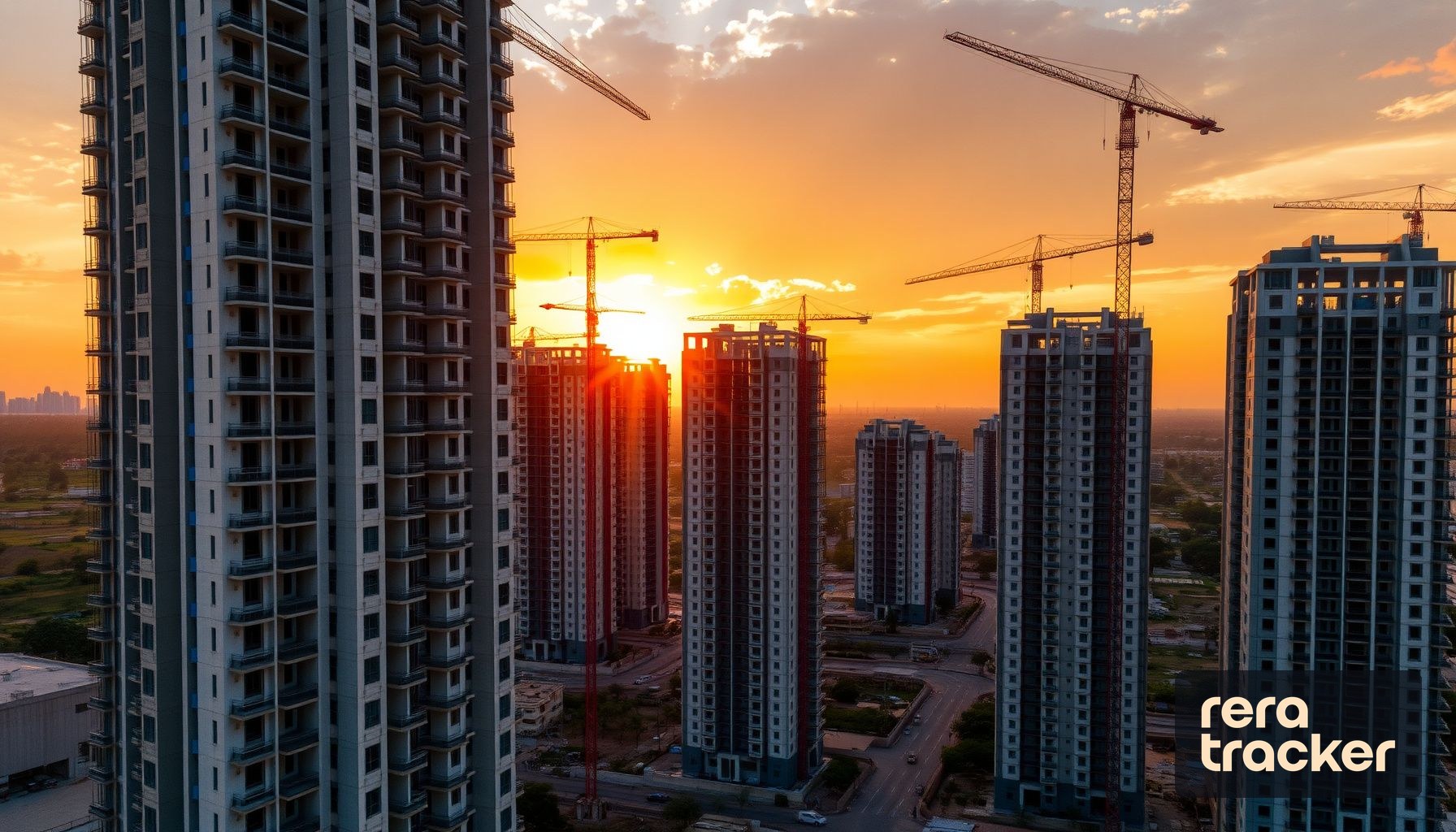
Washington State Pension Fund Invests Rs 230 Cr to Revive Stalled Greater Noida Project: What It Means for Homebuyers
WSIB's Rs 230 crore investment in Hawelia Group's Shri Radha Sky Gardens marks the first foreign pension fund entry into India's stalled project revival market. Analysis, context, and what it signals for NCR homebuyers.
Stay updated on RERA
Get the latest insights on real estate regulations and compliance delivered to your inbox.
No spam. Unsubscribe anytime.