Builder Delayed Your Possession? Here's What RERA Says and How to File a Complaint
Step-by-step guide to filing a RERA complaint for delayed possession — your legal rights, compensation calculation, the complaint process, and what to expect.
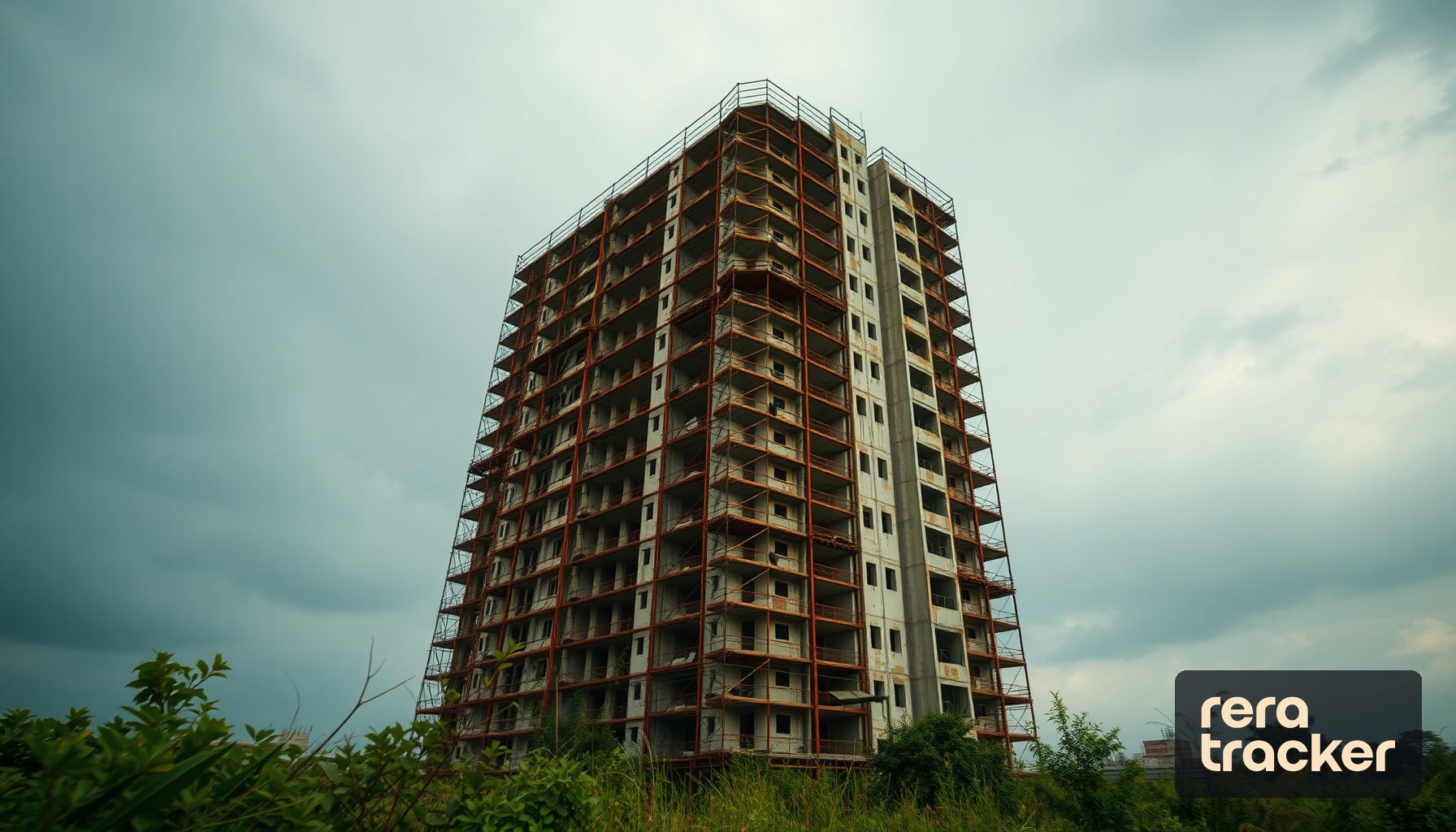
You were promised possession in 2023. It is now 2026, and the flat is still under construction. The builder sends vague updates. The sales team no longer picks up the phone. Meanwhile, your EMI keeps getting debited every month for a home you cannot live in.
If this sounds familiar, you are not alone. Delayed possession is the single most common grievance filed before RERA authorities across India. And the law is firmly on your side — if you know how to use it.
This guide walks you through everything: your legal rights under RERA, how to calculate the compensation you are owed, the exact steps to file a complaint (with specifics for UP RERA and Haryana RERA), what happens at the hearing, and the appeal process if things do not go your way.
Your Rights Under RERA Section 18
Section 18 of the Real Estate (Regulation and Development) Act, 2016 is the most important provision for any buyer dealing with a delayed project. It states, in plain terms, that if a promoter fails to complete a project or hand over possession by the date specified in the agreement for sale, the allottee (that is you) is entitled to one of two things:
- A full refund of the amount paid, along with interest, if you choose to withdraw from the project.
- Possession plus compensation in the form of interest for every month of delay, if you choose to stay in the project and wait for your flat.
This is not discretionary. The builder cannot negotiate this away. The right to interest on delayed possession is statutory — it exists because the law says it does, regardless of what your builder-buyer agreement contains.
One critical detail: many builder-buyer agreements include clauses that attempt to waive or limit the buyer’s right to compensation. RERA overrides these clauses. Section 18 is a non-negotiable protection, and multiple RERA benches and the Supreme Court have upheld this position.
What Counts as “Delay” Under RERA
Delay is measured from the date of possession committed in the agreement for sale. Not the verbal promise. Not the brochure. Not what the sales executive told you over coffee. The legally binding date is the one written in the registered agreement.
If your agreement says “possession by December 2023” and the builder has not handed you a completed, occupancy-certificate-holding unit by that date, the project is delayed. Period.
The Grace Period Question
Most builder-buyer agreements include a grace period clause — typically 6 to 12 months beyond the committed possession date. Builders lean heavily on this clause to stall complaints.
Here is what you need to know: RERA authorities have taken inconsistent positions on grace periods. Some benches have allowed a reasonable grace period (usually 6 months) if it is explicitly mentioned in the agreement. Others have struck down grace period clauses entirely, holding that the committed date is the committed date.
The safest approach: if your agreement includes a grace period, wait for that period to lapse before filing. It removes one more argument the builder can make. But if you are already well past the grace period, file immediately — there is no reason to wait further.
Force Majeure and COVID Extensions
Builders routinely cite COVID-19 as a reason for delay. Several state RERA authorities did grant extensions of 6 to 9 months to account for pandemic-related construction shutdowns (UP RERA granted 6 months, HRERA granted 6 months under certain conditions). However, this extension is not open-ended. If your project was already delayed before COVID, the pandemic excuse holds no weight for the pre-existing delay. And if the builder is citing COVID for delays extending into 2025 or 2026, that argument is dead on arrival.
How to Calculate Your Compensation
RERA compensation for delayed possession is calculated as interest on the total amount paid by the buyer to the builder. The interest rate is prescribed by each state RERA, but the standard benchmark across most states is:
SBI Marginal Cost of Lending Rate (MCLR) + 2%
As of early 2026, SBI MCLR hovers around 8.5%, making the effective rate approximately 10.5% per annum.
Example Calculation
Suppose you have paid Rs. 60 lakhs to a builder, and possession is delayed by 24 months.
- Amount paid: Rs. 60,00,000
- Interest rate: 10.5% per annum (SBI MCLR + 2%)
- Delay period: 24 months
Annual interest: Rs. 60,00,000 x 10.5% = Rs. 6,30,000 Monthly interest: Rs. 6,30,000 / 12 = Rs. 52,500 Total compensation for 24 months: Rs. 52,500 x 24 = Rs. 12,60,000
That is Rs. 12.6 lakhs in compensation. This is not a theoretical number — this is what the law entitles you to.
In practice, some RERA benches have awarded compensation at lower rates, and builders will fight to reduce the amount. But the statutory framework is clear, and if you present your case properly, the math is in your favor.
Refund Calculation
If you choose a full refund instead of waiting for possession, you are entitled to:
- The entire amount paid to the builder
- Plus interest at the prescribed rate (SBI MCLR + 2%) from the date of each payment to the date of refund
- Some benches also award additional compensation for mental agony and harassment, though this varies
Step-by-Step: Filing a RERA Complaint for Delayed Possession
Step 1: Gather Your Documents
Before you file anything, assemble these documents. Missing paperwork is the most common reason complaints get delayed or sent back:
- Allotment letter from the builder
- Builder-buyer agreement (registered, if available)
- Payment receipts — every single one, including bank statements showing EMI debits
- Possession date commitment — the clause in your agreement specifying the delivery date
- Correspondence with the builder — emails, letters, WhatsApp messages showing the delay and the builder’s responses (or lack thereof)
- Project RERA registration details — the RERA registration number and registered possession date
- Demand letters sent to the builder (if any) — a formal demand letter strengthens your case, though it is not mandatory
Step 2: Filing on UP RERA (For Noida, Greater Noida, Ghaziabad, Lucknow)
Uttar Pradesh has one of the most active RERA authorities in the country, handling thousands of delayed possession cases.
- Visit up-rera.in and create an account under “Complainant Login”
- Select “File Complaint” from the dashboard
- Enter the RERA registration number of your project — if you do not know it, search the UP RERA website by project name or builder name
- Fill in your personal details and the nature of the complaint (select “Delay in possession” or equivalent)
- Upload all supporting documents (allotment letter, agreement, payment proof, correspondence)
- Pay the complaint filing fee — currently Rs. 1,000 for complaints up to Rs. 1 crore and Rs. 5,000 for complaints above Rs. 1 crore
- Submit and note your complaint number — you will need this to track your case
Important for Noida buyers: many Noida projects were launched before RERA came into effect in 2017 but were registered under RERA retrospectively. If your project falls in this category, you can still file. UP RERA has jurisdiction over all registered projects regardless of launch date.
Step 3: Filing on HRERA (For Gurgaon and Panchkula)
Haryana RERA operates through two benches: Gurugram (for Gurgaon projects) and Panchkula (for the rest of Haryana).
- Visit haryanarera.gov.in and register as a complainant
- Select the appropriate bench (Gurugram or Panchkula)
- File the complaint online with the project RERA number
- Upload supporting documents
- The filing fee structure is similar to UP RERA
- Track your case through the HRERA portal
HRERA Gurugram has been relatively active in awarding compensation for delayed possession, particularly for projects on the Dwarka Expressway and Golf Course Extension Road.
Step 4: For Other States
The process is broadly similar across states. Visit your state RERA website (a full list is available on rera.gov.in), create an account, file your complaint, and upload documents. The filing fees and timelines vary by state.
What Happens After You File
Timeline Expectations
RERA is mandated to resolve complaints within 60 days of filing. In practice, this timeline is aspirational at best.
Realistically, here is what to expect:
- First hearing date: Typically scheduled 2 to 4 weeks after filing
- Total number of hearings: 3 to 6 hearings spread over 4 to 8 months is common
- Final order: For straightforward delayed possession cases, expect a resolution within 6 to 12 months
Some states are faster than others. Maharashtra RERA (MahaRERA) is generally efficient. UP RERA handles a massive volume of cases and timelines can stretch. HRERA Gurugram falls somewhere in between.
The Hearing Process
RERA hearings are not courtroom dramas. They are relatively informal proceedings conducted by the RERA adjudicating officer or the authority bench. Here is what typically happens:
- First hearing: The authority reviews your complaint, confirms jurisdiction, and issues a notice to the builder (the “respondent”). The builder gets 30 days to file a reply.
- Subsequent hearings: Both parties present their arguments. The builder will typically argue force majeure, claim construction is almost complete, or question the compensation calculation. You (or your lawyer) respond to each argument with documentary evidence.
- Final hearing and order: The authority issues a written order either directing the builder to pay compensation, grant a refund, or some combination. The order is legally binding.
You are allowed to attend hearings virtually in most states. You do not need to be physically present for every hearing.
Self-Filing vs. Hiring a Lawyer
One of the most common questions buyers ask is whether they need a lawyer. The honest answer: it depends.
When Self-Filing Works
RERA was designed to be a homebuyer-friendly forum. You do not need a lawyer to file or argue a simple delayed possession complaint. Self-filing works well when:
- The delay is clear-cut (past the committed date with no ambiguity)
- You have all your documents in order
- The builder has not raised complex legal defenses
- You are comfortable presenting your case in a quasi-judicial setting
Thousands of buyers have successfully argued their own cases before RERA. The authorities are generally sympathetic to individual homebuyers.
When You Need a Lawyer
Get a lawyer if:
- The builder has hired a legal team and is raising technical objections (jurisdiction challenges, questioning the validity of agreements, etc.)
- Your case involves a group complaint with multiple buyers
- The amount at stake is large (above Rs. 1 crore in compensation)
- You are seeking both a refund and additional damages
- The case involves an unregistered project or a project where the builder is disputing RERA applicability
A RERA-experienced lawyer typically charges Rs. 15,000 to Rs. 50,000 for handling a delayed possession case from filing to final order. For a case worth lakhs in compensation, this is a reasonable investment.
The Appeal Process
If the RERA authority rules against you (or if the builder appeals a favorable order), the next step is the Real Estate Appellate Tribunal (REAT). Section 43 of RERA governs the appellate process.
Key points about appeals:
- The appeal must be filed within 60 days of the RERA order
- The appellate tribunal can confirm, modify, or set aside the original order
- Beyond the tribunal, the matter can be taken to the High Court, but this is expensive and time-consuming
- Under Section 40, if a builder fails to comply with a RERA order, it can result in imprisonment of up to 3 years or a penalty of up to 10% of the project cost
Enforcement: The Hard Truth
Here is where honesty is required. RERA enforcement is inconsistent. A favorable order does not automatically mean the money lands in your account. Builders frequently delay compliance, file appeals to stall, or simply ignore orders.
If a builder does not comply with a RERA order, you can file an execution petition under Section 40. Some states have also started attaching builder properties and bank accounts for non-compliance. But the enforcement machinery is still maturing, and persistence is required.
The states with the strongest enforcement track records as of 2026 are Maharashtra, UP, and Haryana. States like Karnataka and Tamil Nadu have significant room for improvement in enforcement.
How to Strengthen Your Case
Beyond the basic filing, these steps meaningfully improve your chances of a favorable outcome:
- Send a formal legal notice to the builder before filing. While not mandatory, it establishes a paper trail and shows the authority that you attempted to resolve the matter directly.
- Calculate your compensation amount clearly and present it in a structured format with dates of each payment, interest accrued, and the total claim.
- Document everything. Screenshot WhatsApp groups, save emails, photograph construction progress (or lack thereof). Evidence of the builder’s negligence strengthens your case.
- Check if other buyers have filed. Multiple complaints against the same builder or project create collective pressure. Some RERA benches consolidate similar complaints for faster resolution.
- File under Section 31 if the builder is non-compliant with RERA registration requirements. Section 31 empowers the authority to impose penalties on developers who violate RERA provisions, including operating without registration or providing false information.
Using ReraTracker to Stay Ahead
Filing a RERA complaint is a reactive measure — you are fighting a problem that already exists. The smarter move is to avoid delayed projects entirely.
ReraTracker helps you do exactly that. Before you invest in a project, use ReraTracker to:
- Check the RERA-registered possession date for any project and compare it against the builder’s marketing claims
- Track project completion status to see whether a project is on schedule or falling behind
- Review builder history — has this developer delayed other projects? A pattern of delays is a red flag that no glossy brochure can hide
- Monitor compliance deadlines so you are the first to know if a project misses a milestone
The best RERA complaint is one you never have to file. Due diligence before booking — powered by real RERA data, not sales promises — is your strongest protection.
Key Takeaways
The law is clear: builders who delay possession owe you compensation. Section 18 of RERA is not a suggestion — it is a statutory right. The compensation formula (SBI MCLR + 2%) is defined, the complaint process is accessible, and RERA authorities across India have ordered hundreds of crores in refunds and interest payments.
But rights on paper only matter if you exercise them. Gather your documents, file your complaint, show up to hearings, and hold the builder accountable. The process takes time and persistence, but the legal framework is designed to favor you.
Do not let a builder’s delays become your financial burden in silence. The system exists. Use it.
Intelligence beyond boundaries
12,000+ projects tracked. 5,000+ builders verified. RERA-verified data, fair market insights, and premium intelligence.
Explore ProjectsMore on RERA
RERA Approved Projects in Ghaziabad 2026: Verified Guide for Buyers
Complete 2026 guide to RERA-registered projects in Ghaziabad. UPRERA verification, micro-market analysis across Indirapuram, Raj Nagar Extension, NH-24, and more.
RERA Approved Projects in Greater Noida 2026: Verified List & Buyer's Guide
Complete guide to RERA-registered projects in Greater Noida 2026. Verified UPRERA data, micro-market analysis, builder track records, and what to check before buying.
RERA Approved Projects in Lucknow 2026: Complete Buyer's Guide
Discover RERA-registered projects across Lucknow. UPRERA verification guide, micro-market analysis, top localities, and what every buyer must check before investing.
Stay updated on RERA
Get the latest insights on real estate regulations and compliance delivered to your inbox.
No spam. Unsubscribe anytime.