Best Modular Kitchen Brands in India 2026: Complete Buyer's Guide
Compare top modular kitchen brands in India — Sleek, Kutchina, IKEA, Godrej, Hafele, and more. 2026 pricing guide, material quality, and installation tips.
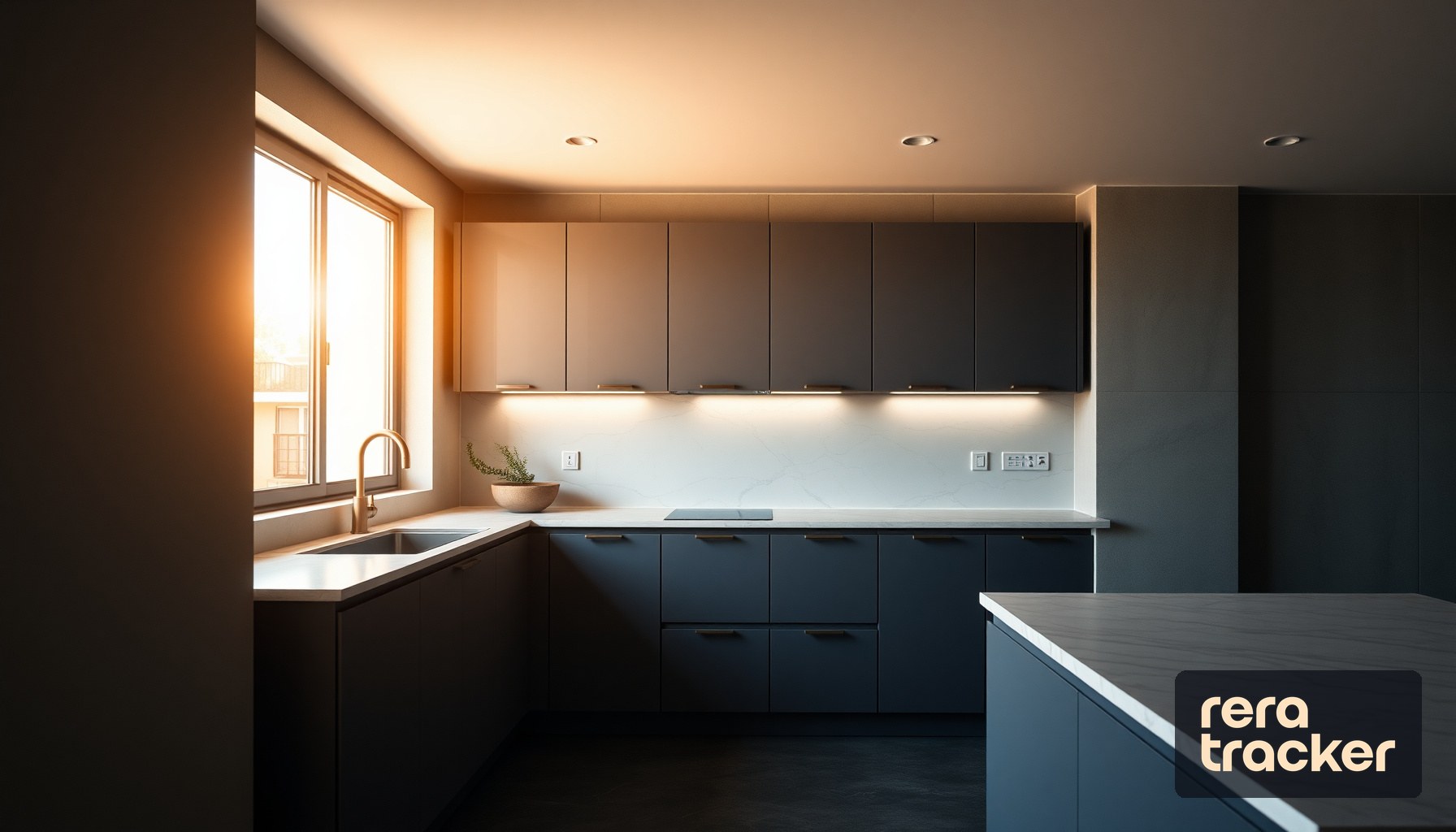
You take possession of your new flat, walk into the kitchen, and find a bare slab of concrete with a few exposed pipes. No cabinets, no chimney, no hob, no sink. The developer’s brochure promised a “premium kitchen counter,” and that is exactly what you got — a counter, and nothing else.
This is the experience of almost every buyer of an unfurnished apartment in India today. New developer projects in Ghaziabad, Gurugram, Greater Noida, Bengaluru, and Pune are increasingly handed over with a granite or quartz counter and plumbing points, but no built-in storage and no appliances. The modular kitchen — once a luxury upgrade — has become a default purchase and a meaningful line item in the post-possession budget.
A reasonable mid-range modular kitchen for a typical 8 by 10 feet space costs anywhere from Rs 3 lakh to Rs 6 lakh in 2026, with luxury installations crossing Rs 12 lakh. This guide walks you through what a modular kitchen actually is, how to read material quality tiers, how the major brands position themselves, realistic pricing, and common tricks that inflate quotes after the initial pitch.
What “Modular Kitchen” Actually Means
A modular kitchen is a system of factory-manufactured cabinet units built to standardized dimensions that snap together on-site. It contrasts with a traditional carpenter-built kitchen, where a local team cuts plywood and laminates on-site.
It has three structural elements:
- Carcass (the box): The cabinet body, usually particle board, MDF, or plywood. Holds shelves and drawers and bears the countertop load.
- Shutter (the door): The visible cabinet front. Can be PVC laminate, acrylic, membrane, lacquer, or veneer, and defines the visual style and price point.
- Hardware: Hinges, drawer slides, lift-ups, and pull-outs. Hardware quality is the single biggest factor in how the kitchen holds up over five to ten years of daily use.
Cabinet widths are typically 300, 450, 600, or 900 mm; base unit heights are usually 720 mm. Standardization makes replacement and repair much easier later.
Material Quality Tiers
Material choice is where pricing gets confusing. The same kitchen layout can cost Rs 2 lakh or Rs 12 lakh depending on what the carcass and shutter are made of. Broadly, there are four tiers.
Entry tier — Particle board + PVC laminate shutter. The cheapest option. Particle board is light and inexpensive but swells when exposed to prolonged water. PVC laminate shutters handle daily wiping but can delaminate at edges over time. Suitable for rental units or tight budgets, not ideal for long-term stays in high-humidity zones.
Mid tier — MDF + acrylic or membrane shutter. MDF is denser than particle board, machines cleaner, and holds screws better. Acrylic shutters offer a high-gloss, mirror-like finish popular in Indian kitchens. Membrane shutters use a thermofoil layer pressed onto MDF. This tier represents the bulk of mid-market sales and generally offers fair price-to-quality if the hardware is good.
Premium tier — Plywood or BWR + acrylic or lacquer. Boiling Water Resistant (BWR) plywood handles moisture far better than particle board or MDF and is less prone to warping. Lacquer shutters are sprayed in multiple coats for a deep finish that ages better than thermofoil. Buyers planning to stay for ten years or more should generally consider this tier if budget allows.
Luxury tier — Solid wood or veneer with lacquer finishes. The top tier uses solid wood or premium veneers with hand-finished lacquer or stains. This is the territory of imported European brands and high-end interior studios, generally justifiable only where the kitchen is a centerpiece and budget is unconstrained.
Major Modular Kitchen Brands in India
The Indian market has consolidated around a handful of national brands plus regional players and a long tail of local fabricators. None is universally “best” — each has trade-offs, and the right choice depends on your city, budget, and how much you value after-sales support.
Sleek (part of Asian Paints)
One of the largest modular kitchen brands in India by retail footprint. Sleek was acquired by Asian Paints, which has expanded the showroom network. Typically targets the mid-market with a wide range of finishes. Nationwide service is a commonly cited strength, though experience varies between individual dealers.
Kutchina
One of the older Indian kitchen brands, with particularly strong presence in eastern and northern India. Offers a wide price range from entry-level to premium and bundles its own chimneys and hobs. The wide range means quality can vary within the brand — always confirm material specifications in writing.
Hafele
A German hardware company that also offers complete kitchen solutions in India. Positioned as premium, particularly well-known for hardware quality. Buyers who prioritize long-term hardware durability often gravitate toward Hafele either for the full kitchen or just the hardware inside a kitchen built by another brand.
Godrej Interio
A long-established Indian furniture and kitchen brand backed by the Godrej Group. Benefits from broad consumer trust and a reputation for reasonable after-sales service. Typically targets the mid-premium segment with practical, family-friendly layouts.
IKEA
IKEA’s offering is built around a flat-pack system where standardized cabinets are assembled and installed by the customer or an IKEA-affiliated installer. More DIY-friendly with lower per-unit pricing, but less customization flexibility. Suitable for buyers who like the aesthetic and are comfortable with a standardized product.
Hacker and other German imports
German brands like Hacker sit firmly in the luxury tier — imported components, premium finishes, and pricing to match. Lead times can be long because of the import cycle, and after-sales service depends on the local dealer.
Regional players and local carpenters
Every major Indian city has regional players like Johnson Kitchens that have built reputations in home markets and sometimes offer better value than national brands. A skilled local carpenter can also build an excellent kitchen on-site, fully customized, often matching branded modular quality at comparable price. The catch is variance — no formal warranty, quality depends on the individual carpenter, and replacement parts are not guaranteed to match later.
Pricing Framework for 2026
Pricing varies substantially by city, dealer, and specification, so the figures below are typical ranges rather than fixed rates. They cover cabinetry only and generally exclude appliances, chimney, hob, and sink.
For a standard 8 by 10 feet (roughly 80 sq ft) apartment kitchen:
| Tier | Typical range | What you generally get |
|---|---|---|
| Budget | Rs 1.5 to 3 lakh | Particle board carcass, PVC laminate shutters, basic hardware |
| Mid-range | Rs 3 to 6 lakh | MDF or low-grade plywood carcass, acrylic or membrane shutters, mid-tier hardware |
| Premium | Rs 6 to 12 lakh | BWR plywood carcass, premium acrylic or lacquer shutters, branded hardware, soft-close drawers |
| Luxury | Rs 12 lakh and above | Imported components, solid wood or veneer, bespoke design, top-tier German hardware |
Mumbai, Bengaluru, and Delhi-NCR generally sit at the higher end of each band; tier-2 cities often run lower. Island layouts, U-shaped kitchens with extensive pantry units, and tall-unit installations push prices significantly higher.
What’s Included and What Isn’t
A common source of frustration is discovering, after signing, that the quoted price did not include items the buyer assumed were standard. In most modular kitchen quotes, the following are typically not included unless explicitly listed:
- Chimney and hob: Almost always quoted separately.
- Sink and faucet: Typically extra. Granite or quartz sinks with pull-out faucets can add Rs 15,000 to Rs 80,000.
- Refrigerator, microwave, dishwasher, oven: Never included. Built-in versions cost considerably more than freestanding equivalents.
- Granite, quartz, or sintered countertop: Sometimes in premium packages, often extra.
- Backsplash tiles, civil work, under-cabinet lighting: Usually add-ons.
Always ask for an itemized quote with each line clearly marked as “included” or “extra.” A vague all-in number is a red flag.
Hardware: The Most Important Spec to Check
If you remember only one technical detail from this guide, remember this: the brand of the cabinet matters less than the brand of the hardware inside it. Hinges, drawer channels, lift-ups, and baskets are the components that fail most often, and their quality determines how the kitchen feels after five years of use.
Three German hardware brands dominate the premium end of the Indian market: Hettich, Blum, and Hafele. Each has multiple product lines at different price points, so simply being told “we use Hafele hardware” is not enough — ask for the specific series and model in writing. A kitchen with a budget carcass but premium hardware will often outlast one built the other way around.
Common Tricks and Traps
A few well-known patterns inflate the final bill.
Quote format games. Some dealers quote per running foot of kitchen length, others per square foot of shutter area — both conceal what is included. The cleanest format is an itemized BOQ (bill of quantities) listing every cabinet, accessory, and charge separately. Resistance to itemized quotes is a meaningful signal. Ask about any internal acronyms (SKF, OPF, etc.) and what they mean.
Accessory upselling. After the base quote is accepted, the design call often becomes a sales call for bottle pull-outs, magic corners, tall larders, and waste bins. Together these can add Rs 50,000 to Rs 1.5 lakh. Decide which accessories you actually need before the design discussion.
Hidden installation charges. Some dealers add installation as a separate 5 to 10 percent line; others bundle it in. Confirm upfront to compare quotes apples-to-apples.
Warranty exclusions. Most warranties cover the cabinet body and certain hardware but exclude shutters from “wear and tear,” water seepage damage, and installation-related issues. A long warranty with extensive exclusions is often less valuable than a shorter warranty with clear coverage.
Post-sale service gaps. Replacement parts and warranty claims require functioning customer support. Before choosing a brand, ask existing owners in your building about their post-sale experience. A brand with weak local service is worth less than its reputation suggests.
DIY vs Brand-Installed
Brand-installed makes sense for most buyers. Modular kitchens need precise levelling, wall anchoring, and plumbing alignment that benefit from experienced installers, and brand installation preserves warranty which self-installation often voids.
DIY in the IKEA flat-pack model can save money for practical buyers with basic tool comfort. It works best when the layout is simple and there are no complex plumbing or electrical alterations.
When to Book Your Modular Kitchen
The ideal window to start is 30 to 45 days before flat possession. Orders typically have a 4 to 6 week lead time from design approval to installation, so waiting until after possession often means living without a functional kitchen for over a month.
Start showroom visits even earlier — you can finalize the layout from the developer’s floor plan, then confirm measurements on-site once you have keys. Booking earlier also gives you negotiating leverage on end-of-quarter discounts.
Tips for First-Time Apartment Buyers
A short checklist before signing any modular kitchen contract:
- Measure twice. Final dimensions should be taken on-site with the dealer present, after keys are handed over. Brochure plans often deviate by an inch or two.
- Get three quotes. For the same layout and same specification. Compare line by line.
- Demand hardware brand and series in writing. Hettich, Blum, or Hafele — no vague labels.
- Read the warranty document, not the sticker. Pay attention to exclusions and the claim process.
- Check installation references. Call two recent owners the dealer installed for.
- Coordinate appliances in parallel. Chimney, hob, sink, and built-ins must match cabinet dimensions to avoid expensive re-fabrication.
How ReraTracker Helps
The first decision in this process is whether your flat will come with a kitchen at all. Some developers deliver flats with built-in modular kitchens in the base price; many do not; and a few include a token kitchen that most buyers eventually replace. Brochure language is rarely clear, and the difference between “kitchen counter provided” and “fully fitted modular kitchen” can mean Rs 3 to 6 lakh of unbudgeted spending.
ReraTracker tracks RERA-registered projects across India and surfaces the specifications that matter to buyers — including what is and is not provided in the standard handover. Knowing whether a project offers an unfurnished, semi-furnished, or fully furnished kitchen before you sign the booking form is one of the simplest ways to avoid budget shocks later.
Frequently Asked Questions
Is a modular kitchen worth it compared to carpenter-built? For most apartment buyers in 2026, yes. The price gap has narrowed, and standardization, finish quality, and ease of replacing parts make modular the more practical choice. A trusted carpenter can still produce excellent work, but variance is higher.
How long does a modular kitchen last? A well-built mid-range kitchen with quality hardware should last 10 to 15 years before a major refresh. Premium installations can last 20 years or more. Hardware is usually the first component to need replacement.
Can I install a modular kitchen myself to save money? Possible if the brand supports DIY and you have basic tool comfort. Most brands require professional installation to preserve warranty. Savings typically range from 5 to 15 percent of total cost.
What is the most important factor in choosing a brand? After-sales service in your specific city. A brand that is brilliant in Mumbai may have weak service in Lucknow. Always check local references before committing.
Should I buy the chimney and hob from the same brand as the kitchen? Not necessarily. Chimneys and hobs are commodities, and buying separately from a dedicated appliance brand often offers better value. Kitchen dealers typically add markup on bundled appliances.
How much should I budget for accessories on top of the base quote? Typically 15 to 30 percent of the base quote, depending on how many pull-outs, baskets, and storage solutions you add. Decide your accessory list before discussing design.
What is the difference between acrylic and laminate shutters? Acrylic has a high-gloss, mirror-like finish and feels more premium. PVC laminate is more affordable with many patterns but lacks the same depth of finish. Acrylic is more prone to visible scratches; laminate is more forgiving.
Is it safe to buy from a small unbranded local dealer? It can be, if the dealer has strong local references and uses recognizable hardware brands. The risk is on warranty and service — for most first-time buyers, an established brand provides better peace of mind even at slightly higher cost.
Final Thought
A modular kitchen is one of the largest purchases you will make for your new flat after possession. Take the time to understand material tiers, hardware specifications, and realistic price ranges before stepping into a showroom. Get itemized quotes, prioritize hardware quality and after-sales service over showroom polish, and plan the spend before possession — the buyers who feel happiest with their kitchen are almost always the ones who budgeted for it as part of the home purchase, not as an afterthought.
Intelligence beyond boundaries
12,000+ projects tracked. 5,000+ builders verified. RERA-verified data, fair market insights, and premium intelligence.
Explore ProjectsStay updated on RERA
Get the latest insights on real estate regulations and compliance delivered to your inbox.
No spam. Unsubscribe anytime.