Dwarka Expressway Projects 2026: Complete Investment Guide
Your 2026 guide to Dwarka Expressway (NPR) real estate. Top sectors, major projects, price trends, connectivity, and RERA-verified buyer advice.
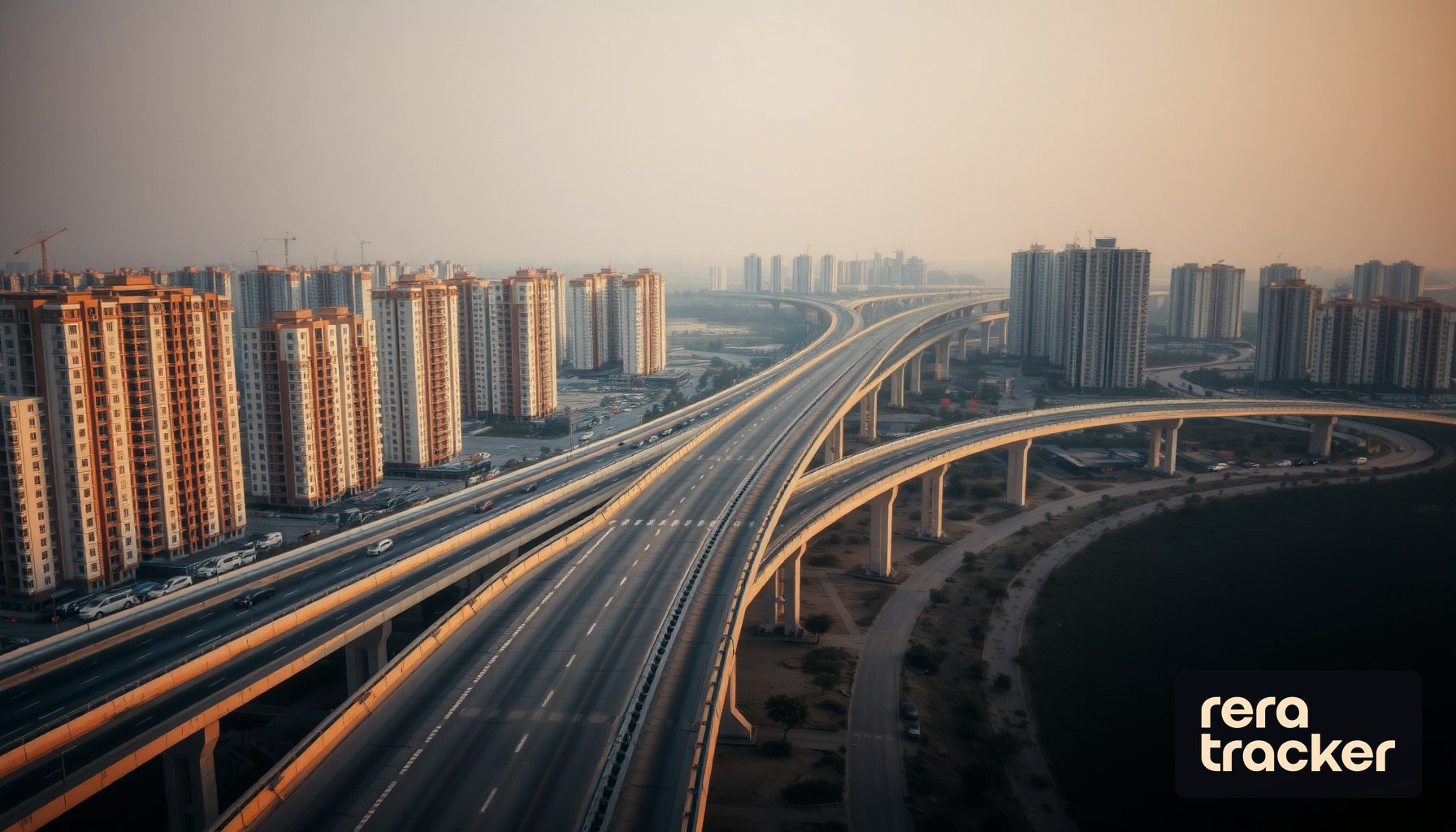
The Dwarka Expressway is finally open, end to end, and the residential market built around it has shifted into a new phase. After more than fourteen years of land acquisition battles, litigation, and missed deadlines, the corridor promised to NCR buyers in the late 2000s is now operational. For the first time, the price assumptions drawn up over the last decade can be tested against real connectivity. This guide walks through what the corridor looks like in 2026, which sectors and price segments matter, and where the opportunities and risks sit.
What the Dwarka Expressway Actually Is
The Dwarka Expressway, formally the Northern Peripheral Road and numbered as part of NH-248BB, is a twenty-nine kilometre, eight-lane, access-controlled expressway running from Dwarka sub-city in southwest Delhi to the Kherki Daula interchange on NH-48 in Gurugram. It was conceived to relieve chronic congestion on the Delhi-Gurugram stretch of NH-48 and open up Gurugram’s western sectors for planned development.
The Delhi portion is roughly ten kilometres; the Gurugram portion is roughly nineteen kilometres. Both sides are now operational, including the elevated urban Gurugram stretch, the most technically challenging part of the project and the source of much of the historical delay. The corridor integrates with the Delhi-Mumbai Expressway at Kherki Daula.
For residential buyers, the implication is straightforward: the western flank of Gurugram is no longer cut off from Delhi, and travel times have become measurable.
Why the Corridor Matters in 2026
Three things make the Dwarka Expressway corridor genuinely consequential rather than another speculative belt.
First, airport time. From most corridor sectors, IGI Airport’s Terminal 3 is now reachable in roughly twenty-five minutes outside peak hours. For a city where the previous drive from Sector 47 or Sohna Road could push past an hour, this is a structural change in lifestyle and rental demand patterns.
Second, congestion relief on older arterial roads. MG Road, Golf Course Road, and the Delhi-Gurugram Expressway segment have all seen measurable easing of traffic since the full corridor opened.
Third, inventory unlocking. Tens of thousands of apartments planned here over the last decade were priced on the promise of this expressway. Now that the promise has materialised, the gap between what was sold and what was delivered is closing.
Sectors Along the Dwarka Expressway
The Gurugram sectors sitting on or directly off the Dwarka Expressway run from the Delhi border down to Kherki Daula. The most active residential sectors include 84, 85, 86, 87, 88, 89, 91, 92, 93, 99, 100, 102, 103, 104, 106, 108, 109, 110A, 111, 112, 113, and 114. These fall within New Gurgaon planning zones, governed by DTCP for licensing and HRERA for project registration.
Broadly, sectors closer to the Delhi border (102 to 114) attract the largest concentration of new high-rise launches because they are nearest the IGI Airport interchange. Sectors 84 to 93 sit further south, closer to Kherki Daula and the Manesar belt, with a mix of mid-segment and affordable inventory. Pricing, social infrastructure, and delivery maturity vary meaningfully sector by sector; do not treat the entire corridor as a single market.
Major Builders Operating Along the Corridor
The corridor has attracted virtually every significant NCR developer. DLF has positioned projects under its Arbour and Privana branding in the central stretch, targeting premium and ultra-premium buyers. Godrej Properties has launches across the affordable-to-premium spectrum. M3M and Signature Global have built large portfolios here, with Signature Global focused on affordable and lower mid-segment. Adani has entered with high-rise launches, and Birla Estates is building in the premium category. Puri Diplomatic Residences, Experion, and TATA Housing each have premium and ultra-premium offerings, alongside several smaller and mid-tier developers with varying track records.
These references are indicative; project selection should be backed by independent HRERA verification and a review of the developer’s broader delivery history, not brand recognition alone.
Price Segments Along the Corridor
The corridor now spans the full residential price spectrum, which is one of its defining characteristics. Most Gurugram micro-markets cluster around a single segment; Dwarka Expressway covers them all.
Affordable Segment (Under Rs 1 Crore)
This segment is dominated by Signature Global and other affordable housing specialists, typically operating under the Haryana Affordable Housing Policy or the Deen Dayal Jan Awas Yojana. Two-bedroom configurations generally sit between 600 and 750 square feet of carpet area. The trade-off is usually distance from the central interchange and more limited amenities. For first-time buyers with strict budgets, this remains a legitimate entry point into Gurugram.
Mid-Premium Segment (Rs 1 to 2.5 Crore)
This is the largest segment by volume of launches in 2026. Mainstream three-bedroom apartments from established developers fall here, with carpet areas between 1,100 and 1,600 square feet. Towers typically include club facilities, pools, gymnasiums, and landscaped open spaces. This is where most working professional families end up.
Premium Segment (Rs 2.5 to 5 Crore)
DLF, Godrej, Birla, and other established names dominate this band. Configurations include three- and four-bedroom units with larger carpet areas, premium fittings, and amenities such as sky lounges and concierge services. Corridor pricing has moved most aggressively here in the last three years, as the airport connectivity story plays directly into the lifestyle proposition.
Ultra-Premium Segment (Rs 5 Crore and Above)
This segment is anchored by branded high-rise luxury launches with international design partnerships and four- or five-bedroom configurations. Some launches in this band have crossed Rs 8 crore for larger units. The ultra-premium segment here competes directly with Golf Course Road, and the corridor’s airport advantage has helped it absorb pricing that would have been unthinkable five years ago.
RERA Status and How to Verify
Every residential project along the Dwarka Expressway falls under HRERA, the Haryana Real Estate Regulatory Authority, with the Gurugram bench as the registering body. Any project covering more than 500 square metres or comprising more than eight apartments must hold a valid HRERA registration before being marketed or sold. The registration number is your single most important verification tool.
When checking a project on the HRERA portal, look at the registration status, the registered completion date, the promoter entity, and any complaints or extensions on record. Pay particular attention to whether the registration has been extended and what the revised completion date is. Multiple extensions are not an automatic disqualifier, but they are a signal that warrants scrutiny.
ReraTracker maintains a structured view of every HRERA-registered project in Gurugram and lets you compare projects, builders, and registration histories side by side in ways the official portal does not directly support.
Connectivity Beyond the Airport
The corridor’s connectivity story extends beyond IGI Airport. The expressway connects to central Delhi via Dwarka sub-city in roughly thirty-five to forty minutes. It links into NH-48 at Kherki Daula, providing direct access to Manesar, Bawal, and the Rajasthan industrial belt. Cyber City and Udyog Vihar are reachable in approximately twenty to thirty minutes depending on traffic. The Delhi-Mumbai Expressway interchange at Kherki Daula opens up the entire western corridor of the country.
For buyers working in central Delhi or even Noida, the corridor is now genuinely commutable for the first time, though Delhi-side surface roads from Dwarka onwards still carry significant peak-hour load.
Metro Connectivity
Metro is the corridor’s most underdeveloped infrastructure pillar and the next major catalyst on the horizon. Delhi Metro Phase 4 includes a planned extension bringing metro service deeper into western Gurugram. The separate Gurugram Metro Limited project has also progressed in planning stages, with stretches that will eventually intersect with the corridor.
Buyers should not pay metro-adjacent premiums for stations that do not yet exist. Metro extensions in NCR have a long history of slipping. Treat any metro promise in 2026 as future upside rather than a priced-in feature.
Price Trends From 2020 to 2026
The corridor’s price trajectory over the last six years is one of the more dramatic stories in NCR real estate. In 2020, broad average asking prices along several Dwarka Expressway sectors sat at Rs 6,000 to 8,000 per square foot for mid-segment apartments. By 2026, those same sectors are quoting Rs 12,000 to 25,000 per square foot depending on segment and location. Premium and ultra-premium projects have moved higher still.
Several factors drove this: the actual opening of the expressway closed the credibility gap that had suppressed pricing; post-pandemic housing demand lifted the entire NCR market; construction cost inflation pushed launch prices upward; and the entry of large branded developers raised average quality and price expectation.
Anyone buying at 2026 prices should be honest: the easy gains from the connectivity reveal have largely been priced in. Future appreciation will depend on metro delivery, social infrastructure maturation, and individual project quality rather than another corridor-wide rerating.
The Historical Delay Lesson
The Dwarka Expressway took more than fourteen years from original promised completion to actual delivery. Land acquisition disputes, environmental clearances, design changes between elevated and at-grade options, and inter-agency coordination problems all contributed. Many projects sold here in the early 2010s were marketed assuming the expressway would be open within two or three years. Those buyers waited a decade or longer.
The hard lesson: infrastructure delivery in NCR almost always slips, and infrastructure not yet built should not be treated as a guaranteed value driver. RERA came into force in 2016, after most of these promises were made, and the worst delays predate the regulatory framework. Buyers now enter under HRERA protections that did not exist for the earlier generation, but project-level scrutiny remains essential.
Risks to Be Honest About
The corridor’s biggest risk in 2026 is oversupply. Tens of thousands of apartments have launched here in the last three years, and many are still under construction. When they complete over the next two to four years, absorption will be tested. Rental yields and resale liquidity in some sectors may come under pressure if supply exceeds end-user demand at asking prices.
Quality varies widely. The brand on the gate is not a substitute for inspecting delivered units in a developer’s existing portfolio. Some corridor projects have launched at premium prices with finishings that do not match. The only way to tell is to walk a recently delivered project from the same developer.
Society formation in new sectors is genuinely difficult. Towers in undeveloped sectors face challenges around water supply, sewerage, and the slow handover of common areas from developer to RWA. Buyers moving into the first towers of a new sector should expect a few years of friction.
Who Should Buy on the Corridor
End-users who prioritise airport connectivity, work in west Delhi, or want a Gurugram address with a shorter drive to central Delhi have a strong case. Long-term investors with a five-to-ten-year horizon can find well-located premium projects that should benefit from metro delivery and infrastructure maturation. NRIs often find the corridor attractive because airport time is the single biggest practical factor in their lived experience.
Short-term flippers should be cautious. The window for flipping at significant premiums has narrowed, and the oversupply pipeline argues against assuming rapid appreciation.
How ReraTracker Helps You Navigate the Corridor
ReraTracker pulls HRERA registration data for every Dwarka Expressway project and structures it so you can compare builders, projects, and price trajectories without querying the official portal one entry at a time. You can review a developer’s full Gurugram portfolio, check registration extensions, compare launch and current asking pricing, and see which sectors have the heaviest launch activity.
For a corridor where the sheer volume of projects makes comparison difficult, that structured view is the difference between an informed booking and a brand-led guess. Before committing, run the developer and project name through ReraTracker and verify the registration number against HRERA’s portal.
Frequently Asked Questions
Is the Dwarka Expressway fully operational in 2026?
Yes. Both Delhi and Gurugram stretches, including the elevated urban section, are open. Travel from the Delhi end to Kherki Daula is functional end to end. Some peripheral service road works continue, but main carriageway operation is complete.
How long does it take to reach IGI Airport from a Dwarka Expressway project?
From most central corridor sectors, Terminal 3 is approximately twenty to thirty minutes outside peak hours. Peak times can extend to forty minutes or longer depending on Delhi-side surface road conditions and your entry ramp.
Are all Dwarka Expressway projects HRERA registered?
They are legally required to be. Any project with more than eight apartments or covering more than five hundred square metres must have HRERA registration before any marketing or sale. Always verify the number on the HRERA portal. If a developer cannot show valid registration, walk away.
What is a reasonable price range for a 3BHK in 2026?
A mainstream mid-premium 3BHK from an established developer generally sits between Rs 1.6 and Rs 2.8 crore, depending on sector, builder, tower, and floor. Premium-segment units cross Rs 3.5 crore and can go significantly higher. Always confirm carpet area, not super built-up area.
Should I worry about oversupply along the corridor?
Be aware of it. The volume of launches means heavy inventory will hit the market in two to four years. This is more of a concern for short-term flippers and rental investors than for end-users with a long horizon. If you are buying to live in, focus on project quality and HRERA compliance.
Is metro connectivity coming to Dwarka Expressway soon?
Metro extensions are planned but not yet built. Both Delhi Metro Phase 4 and the separate Gurugram Metro project include alignments that will eventually serve corridor sectors, but NCR metro timelines have historically slipped. Do not pay a metro premium for stations that do not exist yet.
How does Dwarka Expressway compare to Golf Course Road for a luxury buyer?
Golf Course Road remains the most established premium address, with mature social infrastructure and resale liquidity built up over two decades. Dwarka Expressway offers newer construction, larger floor plates, and better airport connectivity at now-comparable prices. A buyer valuing IGI convenience may prefer Dwarka Expressway; a buyer valuing an established neighbourhood may prefer Golf Course Road.
What is the single most important check before booking?
Verify the HRERA registration number, check the registered completion date and any extensions, and review the developer’s broader Gurugram delivery history. ReraTracker surfaces this in one place. Do this before any payment, and never rely solely on a brochure or a sales executive’s verbal commitment.
Intelligence beyond boundaries
12,000+ projects tracked. 5,000+ builders verified. RERA-verified data, fair market insights, and premium intelligence.
Explore ProjectsMore on Investment
Raj Nagar Extension Ghaziabad Investment Guide 2026: Projects, Pricing, Connectivity, Rental Yields
Complete buyer-investor guide to Raj Nagar Extension — Ghaziabad's most dynamic residential belt. Major developers, current price bands, completion status, NH-9 connectivity, metro plans, and how Raj Nagar Extension compares to Indirapuram and Vasundhara for 2026.
Golf Course Extension Road Gurgaon Investment Guide 2026: Sectors, Projects, Connectivity, Price Trends
Golf Course Extension Road is NCR's fastest-appreciating luxury belt of the last five years. Complete buyer guide — Sector 58 to Sector 79, major projects (Oberoi 360 North, DLF Privana, M3M, Birla Arika, Godrej), metro connectivity, price history, and what to watch for in 2026.
How to Build a Rental Income Portfolio in Indian Real Estate
Complete 2026 guide to building a rental property portfolio in India. Yield analysis, city selection, financing, tax optimization, and long-term wealth strategy.
Stay updated on RERA
Get the latest insights on real estate regulations and compliance delivered to your inbox.
No spam. Unsubscribe anytime.