Best Areas to Invest in Noida 2026: A Micro-Market Analysis
Data-driven analysis of the best sectors and areas to invest in Noida and Greater Noida in 2026 — covering infrastructure, price trends, upcoming projects, and RERA compliance.
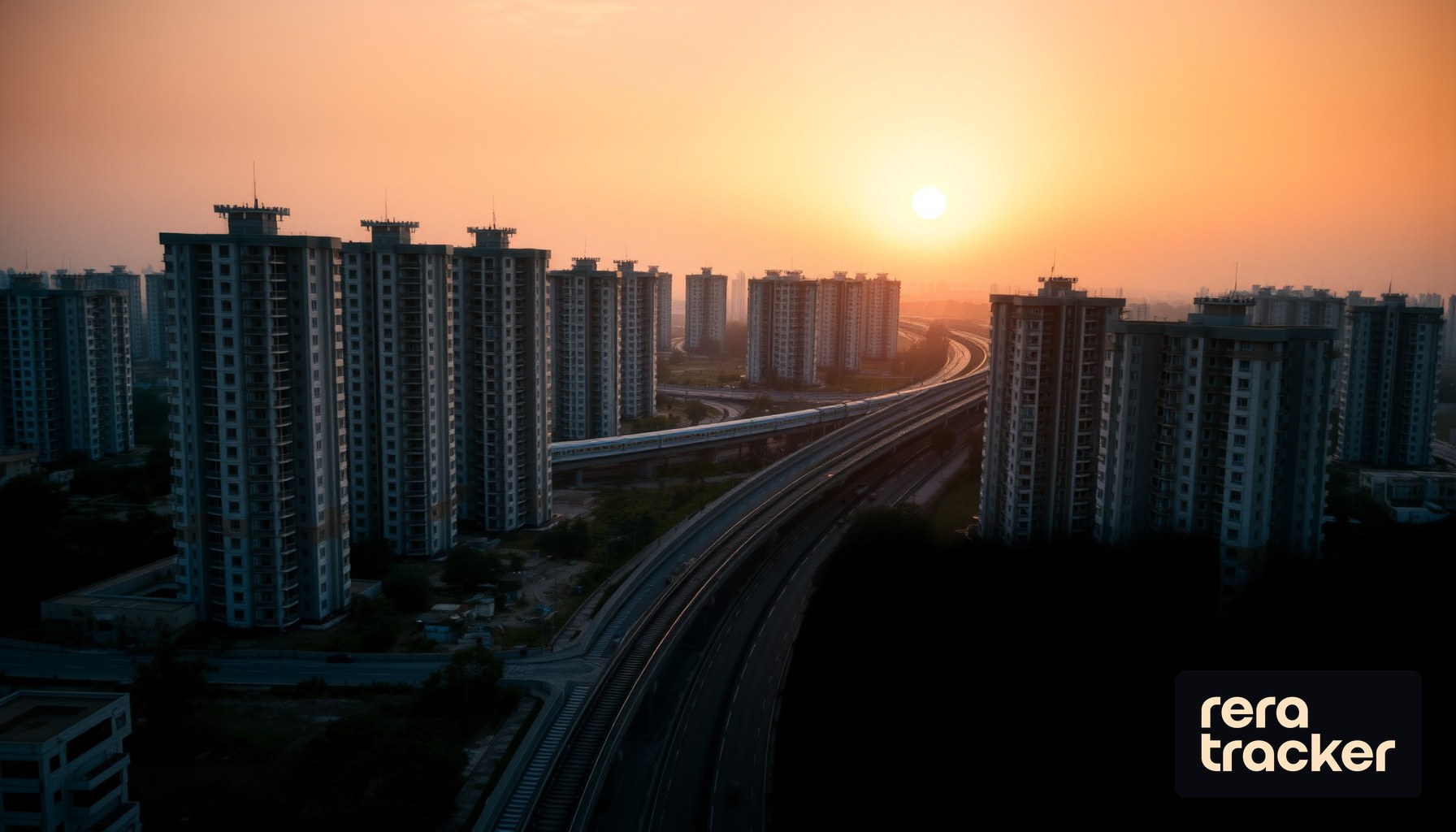
Noida and Greater Noida have moved past the speculative era. What was once a market plagued by delayed projects, shady builders, and stranded buyers is now one of the most infrastructure-backed real estate corridors in northern India. If you are evaluating the best area to invest in Noida 2026, the fundamentals have never been stronger — but the micro-market you pick will determine whether your money works hard or sits idle.
This is not a list generated from press releases. This is a sector-by-sector breakdown built on ground-level understanding of connectivity, builder credibility, price trajectories, and RERA compliance realities.
Why Noida Is Commanding Investor Attention in 2026
Several structural shifts have converged to make Noida-Greater Noida the most closely watched real estate corridor in the NCR.
Noida International Airport (Jewar) is the single largest catalyst. Phase 1 is progressing on schedule, and the ripple effect on land values along the Yamuna Expressway is already measurable. Airports do not just move passengers — they move capital, logistics hubs, hospitality investments, and commercial demand. Every major real estate cycle in India has been anchored by airport-proximate corridors (see: Dwarka Expressway near IGI, or Devanahalli near Bengaluru’s KIA). Jewar is following that playbook, but at a significantly larger scale.
Metro connectivity continues to expand. The Aqua Line already links Noida to Greater Noida, and proposed extensions toward the Yamuna Expressway corridor and Knowledge Park are expected to further compress commute times. Metro access remains the single most reliable predictor of sustained residential demand in the NCR.
The Noida-Greater Noida Expressway functions as the economic spine of the region. Commercial development along this stretch — particularly the cluster of IT/ITES campuses, co-working hubs, and institutional offices — has created an employment base that generates organic housing demand rather than speculative interest.
Film City and data center parks are adding new economic layers. The proposed Film City near Sector 21 of the Yamuna Expressway Authority and multiple data center projects along the expressway corridor signal a diversification beyond IT and manufacturing. These are employment magnets with long capital deployment cycles, which is precisely the kind of demand that supports stable real estate appreciation.
The FNG Expressway (Faridabad-Noida-Ghaziabad) is another connector expected to improve east-west mobility across the region, linking Noida with Faridabad and Ghaziabad in ways that make previously peripheral sectors more accessible.
Taken together, these developments create a corridor where infrastructure investment is running ahead of real estate pricing in several micro-markets — a pattern that historically rewards early, informed buyers.
Key Infrastructure Projects Driving Value
Before diving into sector-specific analysis, it is worth understanding the infrastructure backbone that underpins the entire Noida-Greater Noida thesis.
Noida International Airport (Jewar): The airport is being developed in phases across roughly 5,000 acres. Phase 1 capacity is targeted at 12 million passengers per annum. For real estate investors, the key insight is not the airport itself — it is the ancillary development that follows. Logistics parks, cargo facilities, hospitality clusters, and commercial zones around airports historically generate more real estate demand than the terminal itself.
Aqua Line Extension: The existing Aqua Line connects Noida Sector 51 to Greater Noida Depot. Proposed extensions would push metro access deeper into Greater Noida and toward the Yamuna Expressway corridor. Each new metro station tends to create a radius of elevated demand for both residential and commercial property within a 1-2 km catchment.
Film City: The Uttar Pradesh government has allocated land along the Yamuna Expressway for a film and entertainment hub. While timelines for such projects are always subject to revision, the land acquisition and master planning stages signal serious intent. Film cities in Hyderabad and Mumbai have historically created sustained peripheral real estate demand.
Data Center Parks: Multiple global and domestic operators have announced plans for data center campuses in Noida and Greater Noida. Data centers require reliable power, connectivity, and proximity to business hubs — all of which Noida offers. These are sticky, long-term investments that bring permanent employment and vendor ecosystems.
Dedicated Freight Corridor (DFC): The Eastern DFC passes through Greater Noida, enhancing the logistics and warehousing ecosystem. This is particularly relevant for industrial and commercial real estate along the Yamuna Expressway.
Sector-Wise Micro-Market Analysis: Where to Put Your Money
Here is a candid look at the most relevant sectors and areas for investment in 2026, with an honest assessment of who each area is suited for.
1. Sector 150: The Established Premium Play
Sector 150 is Noida’s marquee residential address. Situated along the Noida-Greater Noida Expressway with proximity to the FNG corridor, this sector has matured into a premium residential zone with established social infrastructure.
Connectivity: Direct access to Noida-Greater Noida Expressway. Proximity to FNG Expressway. Well-connected to Sector 18 and central Noida via internal roads. Metro access requires a short drive to existing stations, though planned connectivity improvements are under discussion.
Price range: This is among the more expensive sectors in Noida. Expect prices in the Rs 8,000-14,000 per sq ft range for quality projects, with premium branded developments commanding higher rates. Prices have shown steady upward movement over the past 18-24 months.
Key projects: Multiple large-format township developments by established builders operate here. Look for projects with completed or near-complete phases rather than newly launched ones — the track record is verifiable.
Who should invest: End-users looking for a ready or near-ready premium home. Investors seeking capital appreciation in an established micro-market with limited new supply. This is not a sector for budget-conscious first-time buyers.
RERA compliance: Given the premium positioning, most active projects in Sector 150 carry RERA registration. However, always verify independently — some older phases or plotted developments may have different compliance statuses. Use ReraTracker to confirm registration details before making any commitment.
2. Sectors 128 and 129: The Noida Expressway Corporate Belt
Sectors 128 and 129 sit along the Noida Expressway in what has become the institutional and corporate heart of Noida. This stretch houses major office campuses, and the residential projects here benefit from walk-to-work demand.
Connectivity: Excellent. Direct Noida Expressway access, reasonable proximity to Delhi border via Sector 18, and well-served by arterial roads. Metro connectivity is available at nearby stations.
Price range: Rs 9,000-16,000 per sq ft depending on the developer and project stage. This belt has seen significant price appreciation driven by commercial demand and branded residential launches.
Key projects: This corridor has attracted some of the most reputed developers in the NCR. Look for projects backed by developers with strong delivery track records and financial stability.
Who should invest: Professionals working in Noida’s corporate corridor seeking proximity to offices. Investors who want exposure to Noida’s most liquid residential micro-market — properties here tend to have better resale demand than most other Noida sectors.
RERA compliance: Newer launches in this belt are generally RERA-compliant, but verify each project’s registration number and check for any compliance orders or delays. ReraTracker provides detailed project-level compliance data that goes beyond what a simple RERA number lookup reveals.
3. Greater Noida West (Noida Extension): Volume Market With Improving Fundamentals
Greater Noida West — still commonly called Noida Extension — has been the NCR’s highest-volume residential market for nearly a decade. It has also been the epicenter of the delayed-project crisis. In 2026, the picture is more nuanced.
Connectivity: The area connects to the Noida-Greater Noida Expressway and has improving internal road networks. Metro connectivity is not yet direct but is part of future planning. Commute times to central Noida can be significant during peak hours.
Price range: Rs 4,500-7,500 per sq ft, making it one of the most affordable organized residential markets in the NCR. This price accessibility is both the area’s strength and its risk factor.
Key projects: Hundreds of projects exist here in various stages — completed, under construction, and stalled. The critical exercise for any buyer is distinguishing between builders who are delivering and those who are not. RERA compliance status is non-negotiable in this micro-market.
Who should invest: Budget-conscious end-users who need a home in the NCR and can accept longer commute times. First-time buyers who cannot afford Noida sectors. Investors should be extremely selective — only consider projects with active construction, RERA registration, and a verifiable possession timeline.
RERA compliance: This is the area where RERA verification matters most. Many projects here have faced RERA complaints, delayed timelines, or restructured delivery schedules. Before putting down a single rupee, run the project through ReraTracker to check registration validity, builder complaint history, and stated completion dates. Do not rely on broker assurances.
4. Yamuna Expressway / Jewar Corridor: The Long Bet
The Yamuna Expressway corridor stretching from Greater Noida toward Jewar is the speculative frontier of the NCR market. The airport is the thesis. Everything else follows.
Connectivity: The Yamuna Expressway itself provides high-speed road connectivity to Greater Noida and, by extension, to Noida and Delhi. However, last-mile connectivity within the corridor — internal roads, public transport, social infrastructure — is still developing.
Price range: Rs 3,000-6,000 per sq ft for residential plots and apartments, with significant variation based on proximity to the airport site and developer credibility. Land prices have moved sharply in pockets closest to the airport.
Key projects: The Yamuna Expressway Industrial Development Authority (YEIDA) has launched plotted schemes that have seen strong demand. Private developers are also active, but project maturity varies widely.
Who should invest: Investors with a 5-7 year horizon who believe in the airport-driven appreciation thesis. This is not an end-user market yet — social infrastructure (schools, hospitals, retail) is limited. The risk-reward ratio favors patient capital, not immediate occupancy needs.
RERA compliance: Since many offerings here are plotted developments or early-stage projects, RERA applicability and compliance can be complex. Authority-developed plots (YEIDA) follow their own framework, while private builder projects must carry RERA registration. Verify every private project on ReraTracker. Do not assume that proximity to the airport automatically means the project is legitimate.
5. Sectors 62 and 63: The Commercial-Residential Hybrid
Sectors 62 and 63 are among Noida’s oldest established areas, anchored by a dense concentration of IT companies, startups, and commercial establishments. The residential market here benefits from this embedded employment base.
Connectivity: Among the best-connected areas in Noida. Metro access (Blue Line), proximity to Delhi via NH-24, and well-developed internal road infrastructure. This is a commuter-friendly location by NCR standards.
Price range: Rs 6,000-10,000 per sq ft. Given the established nature of the area, new supply is limited, and much of the available inventory is in resale or older projects. Newer developments in adjacent sectors command slightly different pricing.
Key projects: The residential market here is largely mature — expect builder floor apartments, older group housing societies, and a few redevelopment opportunities rather than large new launches.
Who should invest: IT professionals working in the Sector 62-63 belt who want minimal commute. Investors looking for rental yield — proximity to offices creates consistent rental demand that many Noida sectors cannot match.
RERA compliance: Older projects may predate RERA, so compliance status varies. For any resale transaction in these sectors, verify whether the society or project has obtained necessary clearances and whether any RERA-related orders apply. ReraTracker can help identify compliance gaps even in older developments.
6. Knowledge Park (Greater Noida): Institutional Anchor
Knowledge Park in Greater Noida is surrounded by universities, colleges, and institutional campuses. This creates a distinct demand profile focused on rental income and student/faculty housing.
Connectivity: Connected via the Noida-Greater Noida Expressway and internal Greater Noida roads. The Aqua Line metro provides direct connectivity. Access to central Noida requires a 30-40 minute commute depending on traffic.
Price range: Rs 3,500-6,500 per sq ft. This remains one of the more affordable organized markets in the NCR with a clear institutional demand anchor.
Key projects: Several residential projects here cater to families associated with the surrounding institutions. Builder credibility and delivery track record vary significantly.
Who should invest: Investors seeking rental yield from the student and working population associated with nearby institutions. End-users who work in Greater Noida and want affordable housing with metro access.
RERA compliance: Project compliance must be verified individually. The institutional anchor provides demand stability, but it does not guarantee that every builder in the area is operating cleanly. Run all shortlisted projects through ReraTracker before advancing to site visits or negotiations.
7. Sectors 74-79: The Mid-Range Sweet Spot
This cluster of sectors along and near the Noida-Greater Noida Expressway represents a mid-range residential market that balances price accessibility with reasonable connectivity.
Connectivity: Expressway access is straightforward. Internal roads connect to Sector 18 and other commercial hubs. Metro proximity varies by specific sector — some are within walking distance of existing or upcoming stations, others require feeder transport.
Price range: Rs 5,500-9,000 per sq ft. This range places these sectors in the mid-market segment, accessible to both upgraders and salaried professionals without the premium pricing of Sectors 128-150.
Key projects: A mix of established group housing societies and newer launches. The area has seen reasonable construction activity, and several projects have achieved possession in recent years.
Who should invest: End-users seeking a balance between price and location quality. Families upgrading from rental accommodations or smaller homes who want established social infrastructure without paying premium-sector prices.
RERA compliance: Generally reasonable for newer projects, but older developments may have patchy compliance histories. Verify each project independently on ReraTracker, paying attention to possession dates and any registered complaints.
8. Pari Chowk Area (Greater Noida): Budget Entry Point
Pari Chowk is a prominent junction in Greater Noida that has developed into a commercial and residential hub. The surrounding area offers some of the most budget-friendly options in the organized NCR market.
Connectivity: Pari Chowk itself is a well-connected junction linking multiple Greater Noida sectors. The Aqua Line metro is accessible. However, commute times to Noida and Delhi are among the longest in this list.
Price range: Rs 3,000-5,500 per sq ft. This is entry-level pricing for the NCR, which makes it attractive for first-time buyers but also means appreciation timelines can be longer.
Key projects: Several affordable housing projects operate in this catchment. The quality and compliance spectrum is wide — from well-managed developments to projects with significant delivery challenges.
Who should invest: First-time buyers with constrained budgets who need a home in the NCR. Investors should approach with caution — while entry prices are low, exit liquidity in budget segments can be challenging. Rental yields are modest given the demographic profile of the area.
RERA compliance: Critical to verify. Budget segments historically have a higher incidence of RERA non-compliance, delayed possession, and builder financial distress. Use ReraTracker to check not just registration status but also builder complaint history and project timeline adherence.
Common Mistakes Buyers Make in Noida Real Estate
Noida’s real estate market has improved materially in terms of transparency and builder accountability, but buyers continue to make avoidable mistakes. Here are the most consequential ones.
Buying in Non-RERA Registered Projects
This remains the most dangerous mistake a buyer can make. Some projects operate without valid RERA registration — either because they have not registered, their registration has lapsed, or they are structured to fall outside RERA’s coverage (for example, plotted developments below a certain size threshold). Purchasing in an unregistered project means you have no regulatory recourse if things go wrong. No RERA complaint mechanism. No standardized agreement. No builder accountability under the Act. Regardless of how attractive the price looks or how convincing the broker sounds, verify RERA registration before any financial commitment.
Ignoring Builder Track Record
A RERA registration number is necessary but not sufficient. The builder’s history of delivering projects on time, the quality of construction in completed projects, and their financial stability all matter. Noida has seen multiple cases where RERA-registered projects still faced significant delays because the builder ran into financial trouble. Look beyond the registration certificate — examine the builder’s portfolio, check for complaints against their other projects, and talk to residents in their completed developments.
Not Checking Possession Timelines Realistically
The possession date stated in the RERA registration is a legal commitment, but the real estate industry has a well-documented history of optimistic timelines. Cross-reference the stated possession date with the actual construction progress visible on the ground. If a project promises possession in 12 months but the structure is still at plinth level, the numbers do not add up. ReraTracker provides timeline data that helps you assess whether stated dates are realistic relative to construction progress.
Relying Solely on Broker Recommendations
Brokers play a useful role in the market, but their incentives are aligned with transaction closure, not with your long-term investment outcome. A broker recommending a project may be receiving higher commissions from that particular builder. Always conduct independent due diligence. Verify every claim about RERA status, connectivity timelines, and price appreciation projections through independent sources.
Confusing Location Proximity With Connectivity
A project may be geographically close to a metro station or expressway ramp, but if the last-mile road infrastructure is poor, the practical commute experience will not reflect the straight-line distance. Visit the site during peak hours. Drive the actual route. Assess the road quality, traffic patterns, and the real-world feasibility of the daily commute.
Overlooking Resale Liquidity
Not every affordable property is a good investment. If a market has oversupply — as parts of Greater Noida West do — your ability to exit the investment at a reasonable price and within a reasonable timeframe may be constrained. Consider not just the entry price but the exit dynamics: who will buy this property from you, and at what price, when you want to sell?
How to Verify Any Project Using ReraTracker
Every sector and area covered in this analysis carries a common thread: RERA compliance is the non-negotiable foundation of any real estate investment in Noida.
ReraTracker is designed to make this verification process straightforward and comprehensive. Here is how to use it effectively.
Search by project name or RERA number: Enter the project name, builder name, or RERA registration number to pull up the project’s compliance profile. ReraTracker aggregates data from state RERA authorities to give you a consolidated view.
Check registration validity: Confirm that the RERA registration is active, not expired or revoked. A project that was once registered but has since lapsed is functionally the same as an unregistered project from a buyer protection standpoint.
Review builder complaint history: ReraTracker surfaces complaints filed against builders across their project portfolio. A builder with multiple complaints across different projects is a pattern, not a coincidence.
Assess timeline adherence: Compare the stated RERA possession date with actual construction milestones. ReraTracker helps you identify projects where the gap between promise and progress is widening.
Cross-reference across projects: If a builder is developing multiple projects in Noida, check the compliance status of all of them. Financial distress in one project often cascades to others under the same builder.
The five minutes you spend verifying a project on ReraTracker can save you years of frustration and lakhs of rupees in a distressed investment.
The Bottom Line
The best area to invest in Noida 2026 depends entirely on your profile. If you are an end-user with a premium budget, Sectors 128-150 offer established quality. If you are a patient investor betting on infrastructure-driven appreciation, the Yamuna Expressway corridor near Jewar is the highest-upside play. If you need an affordable home in the NCR, Greater Noida West and the Pari Chowk area offer entry points — but demand brutal honesty about builder credibility.
What does not change across any of these micro-markets is the need for verification. Noida’s real estate story is genuinely compelling in 2026. The infrastructure pipeline is real. The demand drivers are structural. But the gap between a well-chosen project and a poorly chosen one can be the difference between wealth creation and capital destruction.
Verify before you invest. Use ReraTracker to cut through the noise, confirm RERA compliance, and make decisions grounded in data rather than broker promises. The market rewards informed buyers. Make sure you are one of them.
Intelligence beyond boundaries
12,000+ projects tracked. 5,000+ builders verified. RERA-verified data, fair market insights, and premium intelligence.
Explore ProjectsMore on Real Estate

Stay updated on RERA
Get the latest insights on real estate regulations and compliance delivered to your inbox.
No spam. Unsubscribe anytime.